
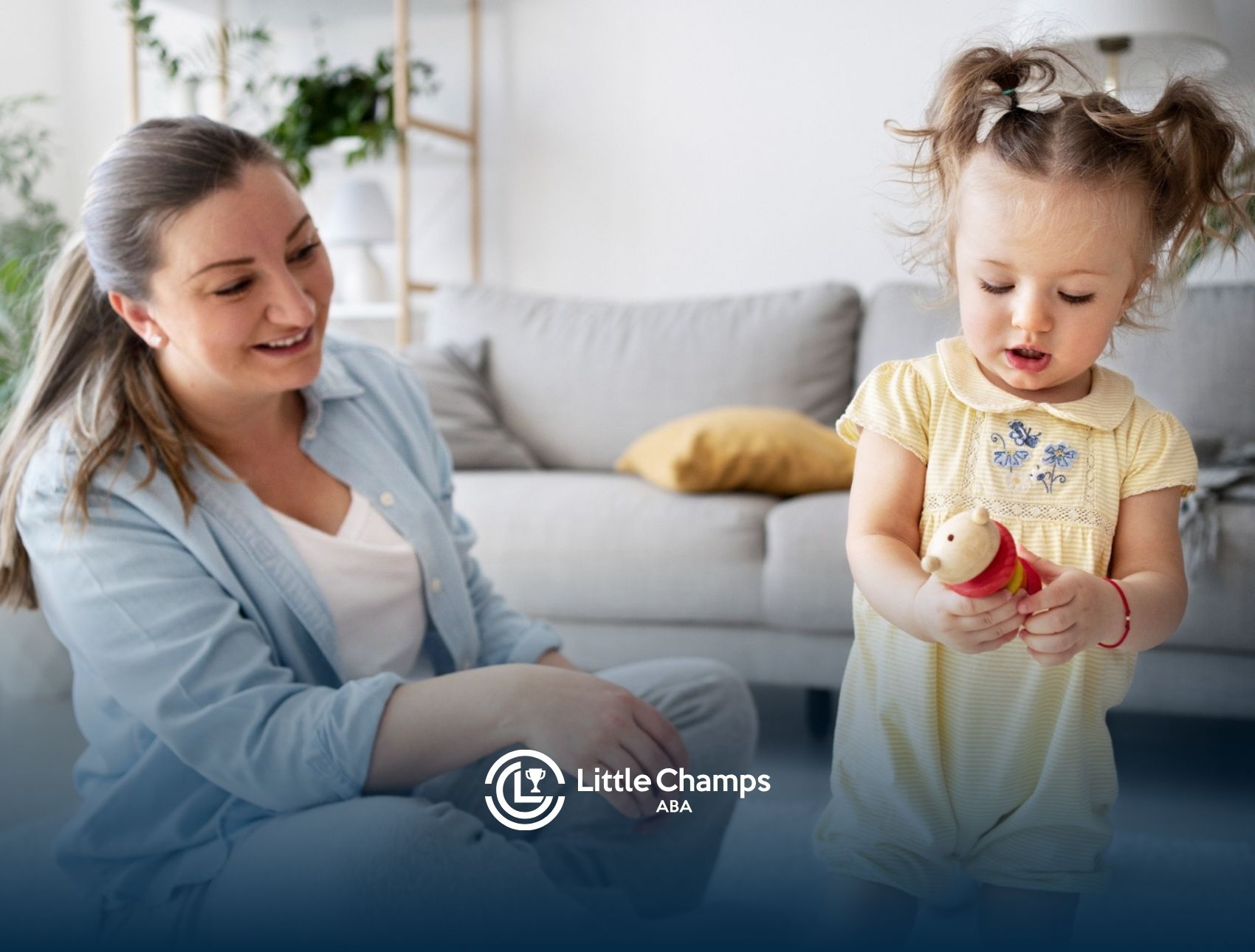
Generalization in ABA means a skill works beyond the exact situation where it was taught. The child who asks for a break with one therapist, at one table, using one card, should also be able to ask a teacher, a grandparent, or a babysitter, in a classroom or a grocery store, using whatever materials are available.
Parents often notice the gap before anyone else. A mother in Salt Lake City told me her son requested snacks beautifully during sessions, then stood silently at the pantry with her. Nothing was wrong with his skill. It simply had not been practiced with her, in her kitchen, with her wording.
Here is how generalization works, why it is planned from the first session, and what you can do to help skills take hold everywhere.
What Generalization Means in ABA Therapy
Behavior analysts use the term to describe skills that transfer. A skill that appears only under the conditions it was taught is incomplete, which is why generalization is treated as part of the goal rather than a bonus. Three related ideas sit underneath it.
Stimulus Generalization: New People, Places, and Materials
This is the type most parents mean. Your child washes hands at the clinic sink and also at the school sink. They greet the therapist and also greet a neighbor. Each new person, room, or object counts as a variation the skill needs to handle.
Response Generalization: More Than One Way to Do It
Children also need flexible responses. A child asking for help might say “help,” sign it, hand over a card, or bring the object to an adult. Any of those counts as success when the outcome is the same.
Maintenance: Skills That Last Over Time
Maintenance means the skill survives after teaching ends, including through school breaks and staff changes. A skill that disappears over a long summer needs a maintenance plan, not a new program.
Why ABA Generalization Deserves Attention From Day One
The old approach in our field was to teach in one setting and hope the skill spread. It rarely did. A skill that lives only in a therapy room does not help a child order food, join a classroom routine, or ask a sibling for a turn.
Planning for it changes what teaching looks like from the very first session, including where sessions happen, who is in the room, and what materials appear. Our overview of the benefits of ABA explains why functional, everyday use is the standard we aim for.
Signs a Skill Has Not Generalized Yet
These patterns come up often in parent meetings:
- Your child performs the skill with one therapist but not with you
- The skill works with a specific toy, cup, or worksheet and no others
- It appears in the therapy room and not at school
- Slight changes in wording stop the response
- The skill fades during breaks and has to be retaught
None of these mean therapy is failing. They tell the team which variations to add next.
How BCBAs Teach for Generalization in ABA
Generalization strategies are built into program design. These are the ones we use most, and most of them have decades of research behind them.
Teach in the Natural Environment
Skills learned where they will be used tend to transfer better. In one early study of children learning to name objects, teaching with real objects produced more use of those names in everyday settings than teaching with pictures alone. That finding still shapes how we run sessions, which is why so much of our work happens at kitchen tables, in classrooms, and on playgrounds.
Use Multiple Examples and Multiple People
Teaching with several examples that cover the range of what a child will meet in real life works better than drilling one. Research on teaching students to use vending machines found that practicing across several different machines produced far more success with untrained machines than practicing on one.
In practice, that means three cups rather than one, several door handles, several ways of asking, and rotating therapists, parents, and siblings into practice.
Loosen the Teaching Conditions
Once a skill is reliable, we vary things on purpose: different rooms, different times of day, background noise, different phrasing of the same instruction. Controlled variation prepares a child for a world that will not stay the same.
Shift Toward Natural Reinforcement
Early teaching may use frequent, obvious reinforcement. Over time we fade toward the consequences that exist naturally, such as getting the snack you asked for or being included in a game. Our guide to reinforcement schedules explains how that fading works without losing the skill.
Program Common Cues Across Settings
A visual card, a first-then board, or a token system that travels between home, clinic, and classroom gives your child the same cue everywhere. Our post on visual schedules covers how to build supports that move with the child.
Teach Skills the World Will Reinforce
We prioritize skills that other people naturally respond to, such as asking for help, greeting, and requesting a break. These get reinforced by teachers, peers, and relatives without any special training, which makes them far more durable.
Why Home, School, and Community Sessions Support Generalization
Where therapy happens has a direct effect on whether skills transfer. Each setting supplies variations the others cannot, which is the main reason our model spans several environments.
Skills Built at Home
Home is where most routines live: mealtimes, dressing, bedtime, sibling negotiations. ABA therapy at home lets us teach with your furniture, your language, and your morning schedule, so there is no gap to bridge later.
Skills Carried Into School and Daycare
Classrooms add group instruction, waiting, transitions with bells, and peers who will not prompt politely. ABA therapy in school and ABA therapy in daycare put the same goals in front of different adults and demands, and our post on transition struggles covers the part of the day that often needs the most support.
Skills Practiced in the Community
Stores, waiting rooms, and playgrounds test a skill under unpredictable conditions. A family in Marietta worked for weeks on their daughter waiting in line at home with a timer. The skill only became reliable after three short practice trips to an actual checkout counter.
Clinic sessions still have a role. Center-based ABA therapy offers a controlled space to teach something new before taking it into noisier places.
What Parents Can Do to Support ABA Generalization at Home
Parents are the single biggest factor in whether skills transfer, because you are present for far more of the week than any therapist. These steps make the most difference:
- Use the skill in real moments, not practice sessions. Prompt a request at the moment your child wants juice.
- Vary your wording. Say “shoes on,” “time for shoes,” and “let’s get ready” so the skill is not tied to one phrase.
- Bring in other people. Grandparents, siblings, and babysitters should all get a turn.
- Respond the same way every time. If a break card works in session, it should work at home too.
- Accept any form of the response. A sign, a word approximation, or a device message all count.
- Tell your BCBA what you are seeing. Details about where a skill breaks down shape the next set of goals.
Parent training sessions exist for this reason, and they are often the fastest route to progress. How many hours a child receives also affects how many settings can be covered, which our post on ABA therapy hours explains.
How Generalization Is Measured in ABA Programs
Generalization is data, not a feeling. Teams check it deliberately rather than assuming it happened.
Common methods include probes with a person who has not taught the skill, probes in an untrained setting, and checks with materials the child has never used in teaching. Maintenance probes repeat weeks later, after active teaching has stopped.
Useful questions for your next meeting:
- Which goals currently have generalization built into them?
- Who else has tested this skill besides the treating therapist?
- What does the data show at home compared with the clinic or school?
- When will we probe this skill again to confirm it is holding?
Clear answers signal a program designed for real life. The evidence-based practices catalogued in the AFIRM modules from the University of North Carolina include the teaching strategies behind most of this work.
How Little Champs ABA Builds Skills That Work Everywhere
At Little Champs ABA, generalization is written into goals from the assessment onward, and we teach in the settings where skills are needed. We serve families in four states:
- Colorado ABA therapy, including Denver, Aurora, Fort Collins, and Colorado Springs
- Utah ABA therapy, including Salt Lake City, Provo, Sandy, and Park City
- Georgia ABA therapy, including Atlanta, Marietta, Alpharetta, and Savannah
- Virginia ABA therapy, including Richmond, Virginia Beach, Fredericksburg, and Lynchburg
Depending on your location, services include:
- Center-based ABA therapy at our Cottonwood Heights clinic
- ABA therapy at home for daily routines and family practice
- ABA therapy in school for classroom and peer skills
- ABA therapy in daycare for younger children
- ABA therapy for teenagers, with independence and self-advocacy goals
- Telehealth ABA for caregiver coaching between visits
Program availability varies by state and location. If your child does something in therapy that has not shown up at home yet, contact our team for a free consultation and we will look at the plan with you.
Skills That Travel Beyond the Therapy Room
Generalization in ABA is the difference between a skill your child can perform and a skill your child can use. That is the whole point of the work: a request that functions with a grandparent, a routine that holds up at school, a coping strategy that still works in a crowded store.
If a skill is stuck in one setting, the next step is usually more variations rather than more repetitions. Ask your BCBA how each goal is being generalized, and keep practicing in the messy, ordinary moments of your week. If you would like a second look at your child’s plan, reach out to our team.
Frequently Asked Questions About Generalization in ABA
What is generalization in ABA therapy?
Generalization means a learned skill shows up with new people, in new places, with new materials, and at new times, without being retaught each time. A skill that works only in one room with one person has not generalized yet.
What is the difference between generalization and maintenance?
Generalization is about a skill working across situations. Maintenance is about the skill lasting over time once teaching stops. Strong programs plan for both.
Why does my child use a skill in therapy but not at home?
Usually the home version of the task looks different: different words, different materials, different people, and more distractions. The skill is real, it just has not been practiced across enough variations yet.
How long does generalization take?
It varies by skill and child. Simple requests may transfer within days once practiced with several people. Complex routines can take months. Your BCBA should be tracking it rather than guessing.
Can generalization be taught, or does it just happen?
It can and should be taught. Planning for it, by using several examples, several people, and natural settings, works far better than teaching in one setting and hoping the skill spreads.
What can I do at home to help?
Use the target skill during everyday routines, vary how you phrase requests, bring siblings and grandparents into the practice, and respond consistently when your child uses the skill with you.
Sources
- Chandler, L. K., Lubeck, R. C., & Fowler, S. A. (1992). Generalization and maintenance of preschool children’s social skills: A critical review and analysis. Journal of Applied Behavior Analysis, 25(2), 415-428. https://pmc.ncbi.nlm.nih.gov/articles/PMC1279720
- Sprague, J. R., & Horner, R. H. (1984). The effects of single instance, multiple instance, and general case training on generalized vending machine use. Journal of Applied Behavior Analysis, 17(2), 273-278. https://pmc.ncbi.nlm.nih.gov/articles/PMC1307940
- The IRIS Center, Vanderbilt University. (2025). Functional behavioral assessment (elementary): Identifying the reasons for student behavior. https://iris.peabody.vanderbilt.edu/module/fba-elem/
- University of North Carolina at Chapel Hill, Frank Porter Graham Child Development Institute. (n.d.). AFIRM evidence-based practice modules. https://afirm.fpg.unc.edu/modules/
- Welch, S. J., & Pear, J. J. (1980). Generalization of naming responses to objects in the natural environment as a function of training stimulus modality. Journal of Applied Behavior Analysis, 13(4), 629-643. https://pmc.ncbi.nlm.nih.gov/articles/PMC1308169