


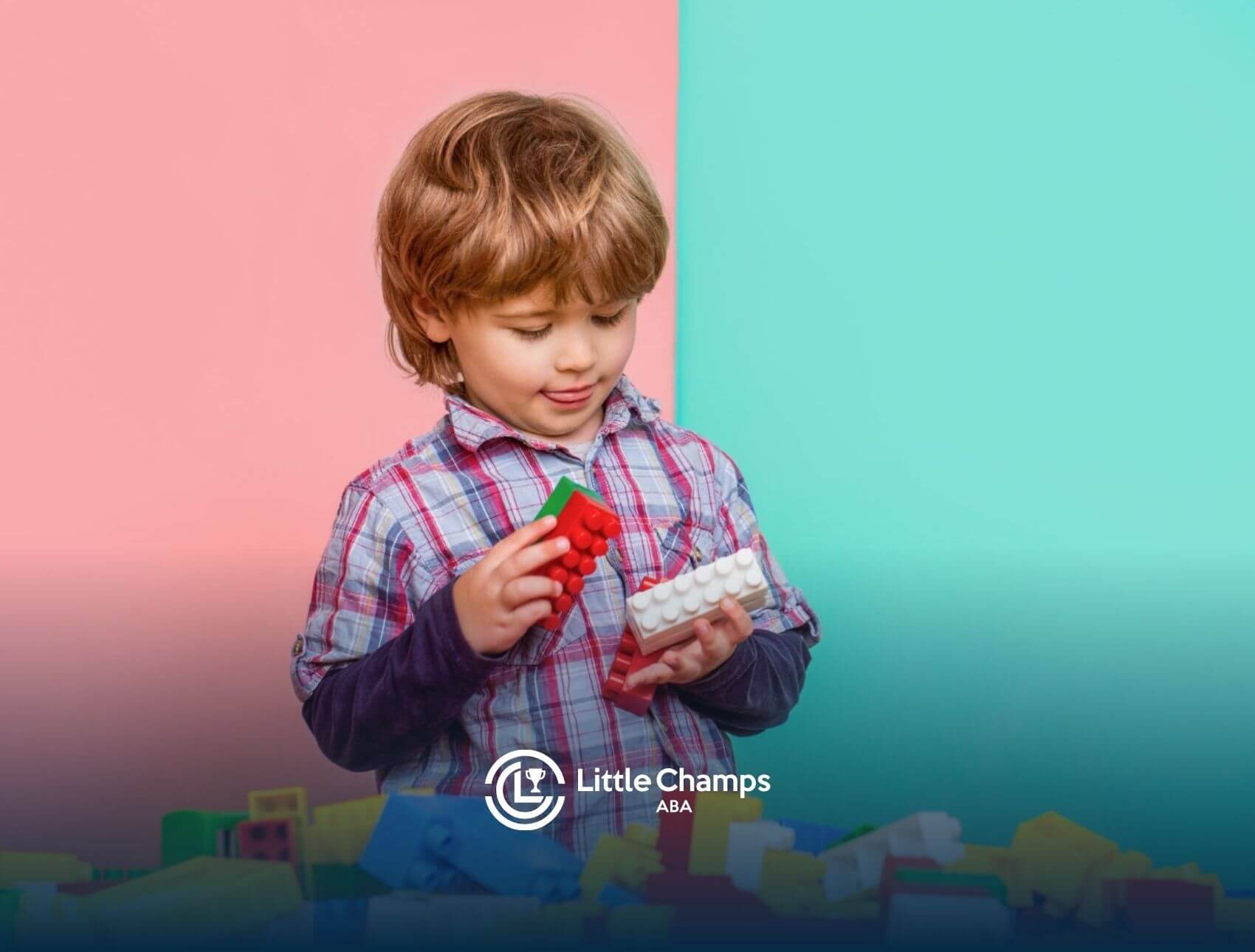
When parents search “Do plastic toys cause autism?” it’s usually coming from a place of fear—not curiosity.
I remember sitting with a family during intake for our Colorado ABA therapy services. Their toddler had just received a diagnosis, and the mother asked me quietly, “Was it the plastic toys? We had so many.”
In that moment, what she really needed wasn’t a lecture—it was clarity and reassurance.
That’s why it’s important to separate myth from science before guilt takes root. Let’s look at what research actually says.
Understanding Autism and the Question: Do Plastic Toys Cause Autism?
Before addressing plastic toys directly, we need context about autism itself.
Autism Spectrum Disorder (ASD) is a neurodevelopmental condition characterized by differences in social communication and patterns of behavior. It is not caused by a single product, event, or parenting choice.
What Research Says About Autism Causes
Large-scale studies consistently show that autism has a strong genetic component. Environmental factors are being studied, but no credible research identifies plastic toys as a direct cause.
Organizations such as Centers for Disease Control and Prevention and National Institute of Environmental Health Sciences acknowledge that autism results from complex genetic and developmental factors—primarily occurring during early brain development.
Autism develops before a child is playing independently with plastic toys.
Why the “Do Plastic Toys Cause Autism?” Myth Persists
We understand why the question keeps resurfacing.
Parents hear about BPA, phthalates, and chemical exposure. Media headlines often blur the line between “under investigation” and “proven cause.”
But there’s a critical difference between:
- Studying chemical exposure in general
- And proving that plastic toys cause autism
So far, no high-quality, peer-reviewed research demonstrates that playing with plastic toys leads to autism.
Environmental Exposure and Autism: What We Actually Know
While plastic toys are not linked to autism causation, environmental research is ongoing in broader contexts.
Prenatal Factors and Autism Risk
Most environmental studies focus on prenatal development—not toddler playtime.
Research has identified certain risk factors, such as:
- Advanced parental age
- Certain prenatal infections
- Premature birth
These are risk correlations, not direct causes. And importantly, they occur during pregnancy—long before children engage in regular toy use.
Postnatal Exposure and Autism Development
Clinically, we do not see evidence that postnatal exposure to everyday plastic toys correlates with autism diagnoses.
In our Utah ABA therapy programs, we’ve worked with children who displayed early differences in eye contact, joint attention, and communication before age one—well before structured toy exposure was significant.
Similarly, through our Colorado ABA therapy services, we’ve supported families whose children showed early developmental differences in infancy.
The patterns are neurological and developmental—not product-driven.
What We See at Little Champs ABA: Real Clinical Perspective
From a lived clinical standpoint, the “plastic toys cause autism” narrative doesn’t match what we observe.
Early Developmental Differences Appear Before Toy Exposure
We once evaluated a toddler whose parents were deeply concerned about toy materials. But when we reviewed developmental history, early signs—limited social referencing, reduced babbling—were present before age 12 months.
Plastic toys weren’t the trigger. Developmental differences were already emerging.
Across hundreds of cases in our:
- In-home ABA therapy programs
- School-based ABA therapy services
- Daycare ABA therapy support
We consistently see autism traits present early and independently of toy types.
Addressing Parental Guilt Around Plastic Toys and Autism
One of the hardest parts of our work is witnessing parental guilt.
A father in our ABA therapy for teenagers program once asked if the plastic action figures his son collected “caused this.” His son was 14.
We reassured him of what the science confirms: autism is not caused by toys, vaccines, or parenting style.
It’s important to replace blame with evidence.
Shifting the Focus Beyond “Do Plastic Toys Cause Autism?”
The more productive question isn’t whether plastic toys cause autism.
It’s: How can we best support a child with autism?
Evidence-Based Support Instead of Misinformation
At Little Champs ABA, our focus is skill development and independence—not speculation.
We work on:
- Communication systems
- Social interaction
- Emotional regulation
- Executive functioning
- Adaptive life skills
Our treatment plans are data-driven. We collect measurable information and adjust strategies accordingly.
This is where meaningful change happens—not in eliminating toys from a playroom.
Building Progress Across Environments
Whether we’re providing:
- ABA therapy at home
- ABA therapy in school
- ABA therapy in daycare
- ABA therapy for teenagers
- Telehealth ABA
Our goal remains the same: help children build skills that increase independence and quality of life.
That’s what truly impacts outcomes.
If you’re navigating confusing information about autism causes, we encourage you to focus on credible research and individualized support.
Contact Little Champs ABA today to schedule a consultation and learn how our team in Colorado and Utah can support your child’s communication, independence, and long-term success.
You don’t need to search for something to blame.
Let’s focus on building what comes next—together.
FAQs
Are chemicals in plastic toys linked to autism?
Some chemicals have been studied for potential health effects, but there is no proven causal link between plastic toys and autism.
What actually causes autism?
Autism is a neurodevelopmental condition influenced largely by genetics, with ongoing research into prenatal and early developmental factors.
Can environmental factors contribute to autism?
Research explores certain prenatal risk factors, but no specific household product—like plastic toys—has been proven to cause autism.
Why do myths about plastic toys causing autism persist?
Misinformation spreads easily online, and parents naturally look for explanations. However, high-quality scientific studies do not support this claim.
Sources:
- https://pmc.ncbi.nlm.nih.gov/articles/PMC4855851/
- https://www.sciencedirect.com/science/article/pii/S0160412022000472
- https://pmc.ncbi.nlm.nih.gov/articles/PMC7082249/
- https://parisbraininstitute.org/disease-files/autism-spectrum-disorders/what-are-biological-mechanisms-and-causes-autism
- https://www.cdc.gov/autism/about/index.html