


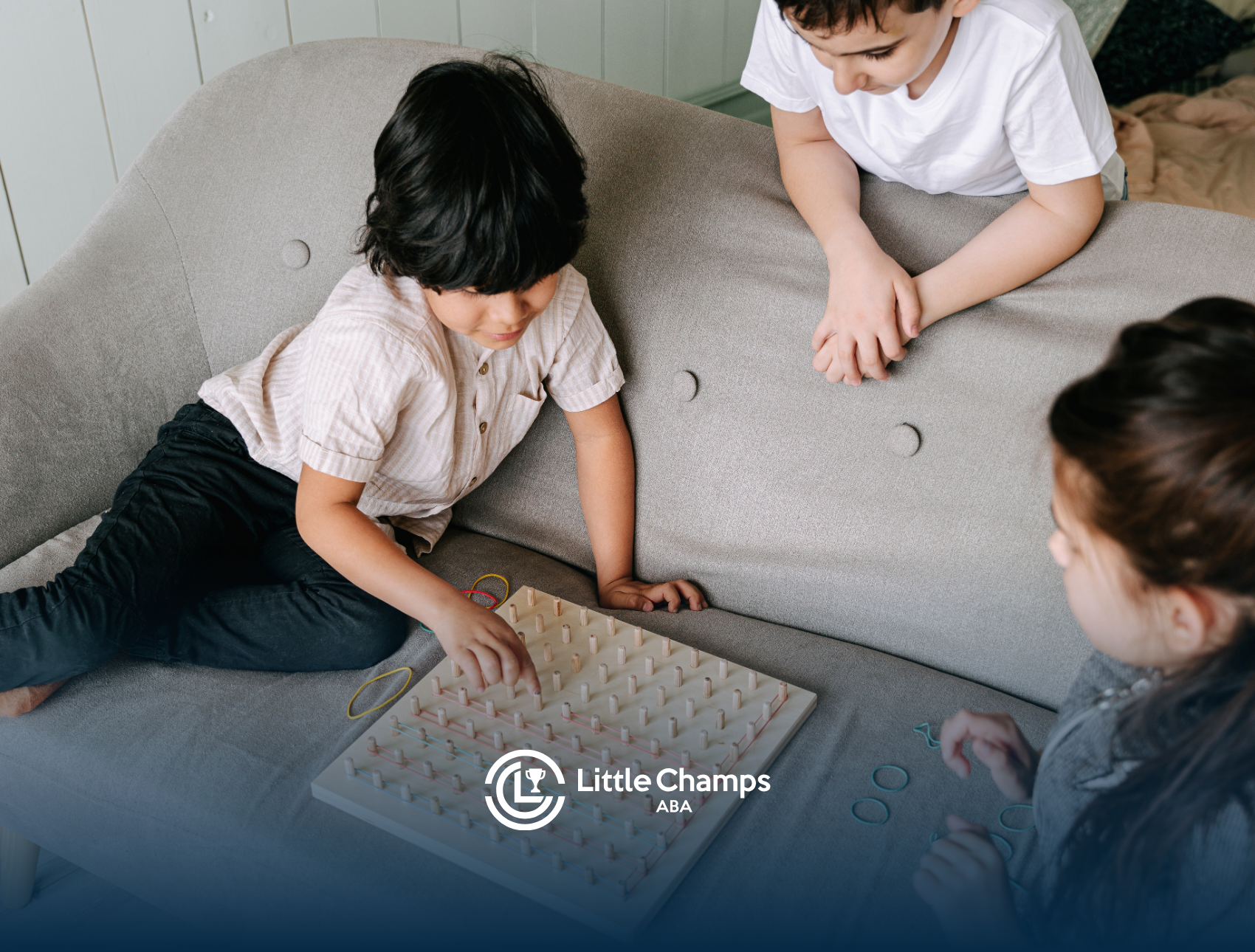
Play is essential for every child’s development—but for autistic children, play often looks different. Many autistic kids prefer structured or repetitive play, like stacking blocks, spinning wheels, or lining up toys. These activities can be soothing and help them make sense of the world through predictability and sensory feedback.
Some children with autism may not immediately engage in imaginative or social play because it requires abstract thinking and communication. However, with support and modeling, they can learn to enjoy shared experiences, such as turn-taking games or pretend play.
Parents can encourage development by joining their child’s play—imitating actions, celebrating small interactions, and gradually introducing new play ideas. Visual supports, routines, and consistent praise also help children feel comfortable exploring new activities.
Through ABA therapy, children learn foundational social and communication skills that promote richer play experiences. Therapists use structured techniques to help children transition from independent to cooperative and imaginative play.
At Little Champs ABA, we make play both fun and purposeful—helping children grow social connections, creativity, and confidence through every joyful moment of play.
Frequently Asked Questions
1. How do autistic children usually play?
Autistic children often prefer solitary play or repetitive activities, such as lining up toys or focusing on specific details rather than group interaction.
2. Why is play different for children with autism?
Play differences are often linked to challenges with social communication, imagination, and sensory processing.
3. Do autistic kids enjoy playing with others?
Yes—but they may express interest differently. They might prefer parallel play (playing beside others) before engaging in cooperative play.
4. How can parents encourage play skills?
Model play behaviors, join in on their interests, and use simple turn-taking games to promote interaction and imagination.
5. Can ABA therapy help improve play skills?
Absolutely. ABA therapy teaches social and communication skills that support shared play, cooperation, and flexibility.