



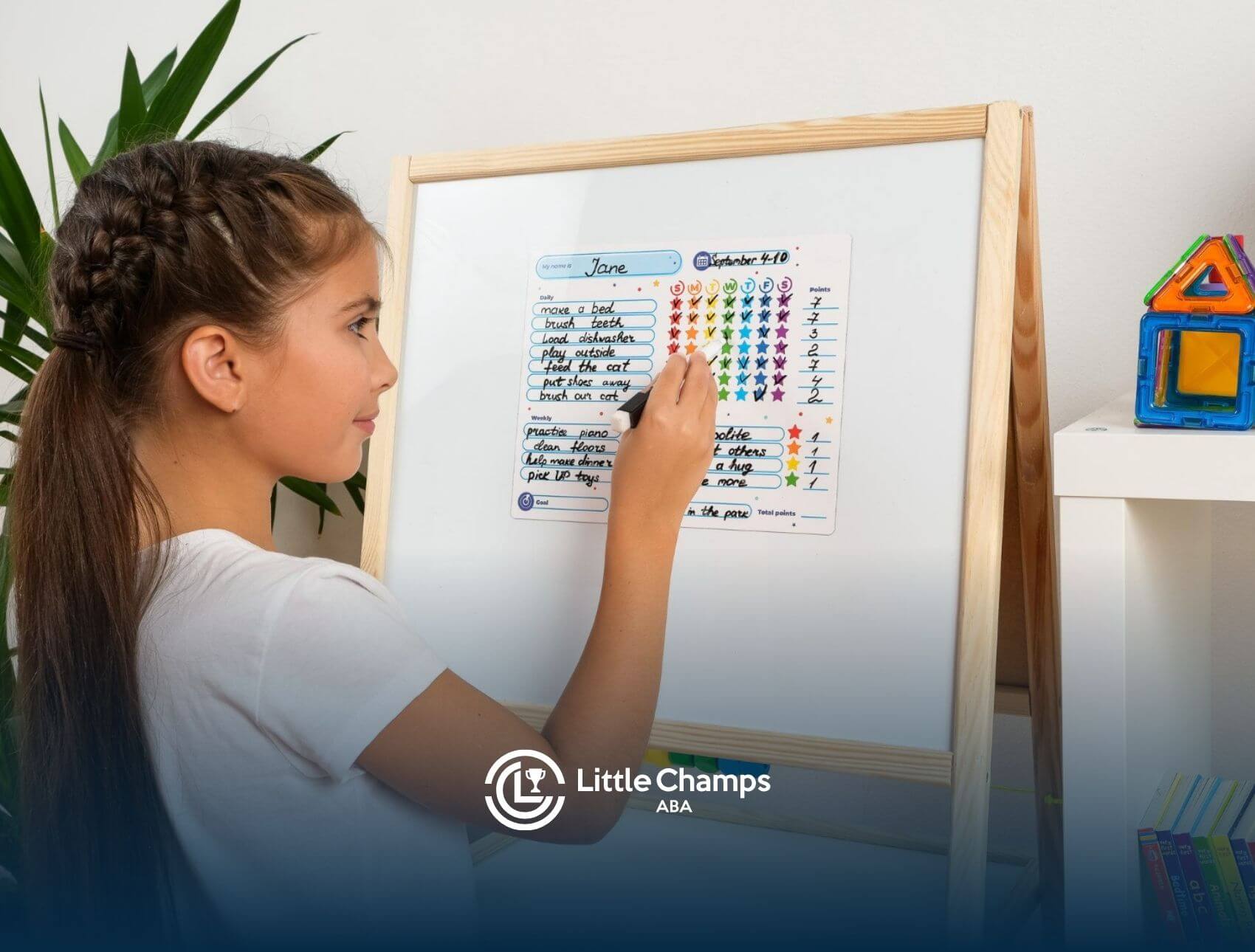
Daily routines can feel surprisingly complicated for children with autism. Tasks like getting dressed, brushing teeth, or transitioning between activities may seem simple to adults, but without clear structure they can quickly become overwhelming.
That’s why many families begin using visual schedules at home—a practical tool that helps children see what’s coming next and navigate routines with greater confidence.
At Little Champs ABA, we work with families every day to create supportive environments that make routines easier for children to understand.
Through individualized ABA therapy programs in Colorado and Utah, we often help parents introduce visual supports that reduce stress, build independence, and make everyday transitions smoother.
Why Visual Schedules at Home Help Children With Autism
Before creating a visual schedule, it helps to understand why visual supports work so well for many autistic children.
Many children process visual information more easily than spoken language. A spoken instruction may only last a few seconds, but a visual cue stays in front of the child for as long as they need it.
Visual Information Reduces Uncertainty
Uncertainty can be a major trigger for stress in children.
When a child doesn’t know what’s coming next, they may feel anxious or resist transitions. Visual schedules reduce that uncertainty by laying out the sequence of events clearly.
For example, we once worked with a five-year-old who struggled every morning before school. His parents described the same pattern: reminders to get dressed turned into meltdowns, and leaving the house often ended in tears.
When we visited their home session, we noticed that the routine relied entirely on verbal prompts. So we helped the family create a simple morning visual schedule with pictures showing:
- Wake up
- Get dressed
- Eat breakfast
- Brush teeth
- Put on shoes
Within a couple of weeks, the difference was noticeable. Instead of arguing with reminders, the child began checking the chart himself.
It wasn’t perfect every day, but mornings were far calmer.
Visual Supports Encourage Independence
Another reason visual schedules are so effective is that they shift the prompt from the adult to the environment.
Parents often tell us they feel like they’re repeating the same instructions all day long. Visual supports give children a way to follow routines without relying entirely on someone telling them what to do.
Over time, that independence builds confidence.
We’ve had kids proudly walk over to their schedule, point to the next step, and say, “Next!”
Those small moments matter.
Creating a Visual Environment at Home
When we talk about a visual environment, we’re not suggesting that families decorate every wall with charts.
Instead, the goal is to place visuals where routines naturally happen.
This makes the supports easy to use and part of everyday life.
Where to Place Visual Supports Around the House
In our home sessions, we often recommend starting with the routines that cause the most stress.
Some helpful placements include:
- A morning routine schedule near the child’s bedroom or bathroom
- A handwashing or toothbrushing chart near the sink
- A homework routine visual at the study area
- A bedtime routine schedule near the child’s bed
One family we worked with placed a small bedtime visual schedule right beside the light switch in their child’s room.
Their son had previously resisted bedtime almost every night. Once he could see the sequence—bath, pajamas, story, lights out—he began moving through the steps with far less resistance.
The routine itself hadn’t changed. The clarity had.
Types of Visual Schedules Families Can Use
Not every visual support for autism looks the same. The best format depends on the child’s age, learning style, and communication skills.
Picture-Based Visual Schedules
These are often the first visual supports we introduce.
Each step of a routine is represented by a picture or photograph.
For example:
- Wake up
- Brush teeth
- Get dressed
- Eat breakfast
- Put on shoes
For younger children, real photographs of their own routines often work best.
We once created a schedule using photos taken in the child’s actual bathroom and bedroom. Seeing familiar spaces made the schedule easier for him to understand.
First–Then Visual Boards
Sometimes full schedules feel overwhelming.
In those cases, we start with a First–Then board, which shows only two steps at a time.
For example:
First: Clean up toys
Then: Go outside
This simple structure helps children understand that completing one activity leads to the next.
We’ve used First–Then boards in many early sessions, especially when transitions between activities were triggering frustration.
Often, once children understand this structure, they begin moving through tasks more willingly.
Choice Boards
Choice boards give children structured ways to express preferences.
These visuals might show options such as:
- Two snack choices
- Two play activities
- Two calming strategies
Giving children choices can reduce power struggles and encourage communication.
We’ve seen children who rarely initiated communication begin pointing to choices almost immediately once the visuals were introduced.
Helping Children Learn to Follow Visual Schedules
Introducing visual schedules at home isn’t just about printing pictures and hanging them on the wall.
Children usually need guidance and practice before the system becomes natural.
Start With One Routine
We usually encourage families to start small.
Instead of visualizing the entire day, begin with one routine that’s already challenging.
Common starting points include:
- Morning routines
- Bedtime routines
- Homework time
- Getting ready to leave the house
Once a child becomes comfortable with one schedule, additional routines can be added.
Use Gentle Prompts at First
In the beginning, children may need reminders to check the schedule.
Parents might say things like:
“Let’s see what’s next.”
Or point to the schedule together.
In many cases, we model this during therapy sessions so families can see how prompting works naturally.
Over time, prompts are gradually reduced as children begin referencing the schedule independently.
How Visual Supports Fit Into ABA Therapy
Visual supports are commonly used within Applied Behavior Analysis because they make expectations clear and consistent.
In ABA therapy, we often help families:
- Identify routines causing frequent stress
- Create personalized visual schedules
- Teach children how to follow the visuals step by step
- Fade adult prompts as independence increases
At Little Champs ABA, we often introduce visual supports during real-life routines.
For example, during one home session we helped a child practice cleaning up toys using a three-step visual sequence. At first, we guided him through each picture.
By the end of the month, he was completing the routine with only a quick glance at the chart.
That kind of progress is exactly what visual environments are meant to support.
Small Visual Changes Can Make Daily Life Easier
Creating visual schedules at home doesn’t require expensive materials or complicated systems.
Often, a few simple visuals placed in the right spots can make a meaningful difference.
When children can see their routines, they often experience:
- Less anxiety about transitions
- Fewer arguments around daily tasks
- More independence with routines
- Greater confidence navigating their day
At Little Champs ABA, we help families build these supportive environments through personalized ABA therapy programs designed around each child’s unique needs. Our clinicians work closely with families throughout Coloradoand Utah, helping children develop communication skills, independence, and confidence in everyday routines.
We provide ABA therapy across several real-life settings so children can practice skills where they matter most:
- ABA therapy at home
- ABA therapy in school
- ABA therapy in daycare
- ABA therapy for teenagers
- Telehealth ABA therapy
Each program is designed to help children build meaningful skills in the environments where they live, learn, and grow.
Contact Little Champs ABA today to learn how our personalized ABA programs can support your child’s development and daily routines.
FAQs
What is a visual schedule for autism?
A visual schedule is a series of pictures, icons, or written steps that show a child what activities will happen and in what order. Visual schedules help children with autism understand routines, transition between activities, and feel more secure about what comes next.
Why are visual schedules helpful for children with autism?
Many children with autism process visual information more easily than spoken language. Visual schedules provide clear and consistent cues that help children follow routines, reduce anxiety around transitions, and become more independent.
How do I create a visual schedule at home?
Parents can start by choosing one routine—such as a morning or bedtime routine—and representing each step with simple pictures. The schedule should be placed where the routine occurs, and parents can guide their child through the steps until the child becomes familiar with the system.
At what age can children start using visual schedules?
Visual schedules can be introduced as early as toddlerhood. Younger children often respond well to simple picture schedules, while older children may use written checklists or digital visual schedules.
Can ABA therapy help families implement visual schedules?
Yes. ABA therapists often help families create personalized visual schedules and teach children how to follow them. Therapists also guide parents on how to use visual supports consistently during everyday routines at home, school, and in the community.