
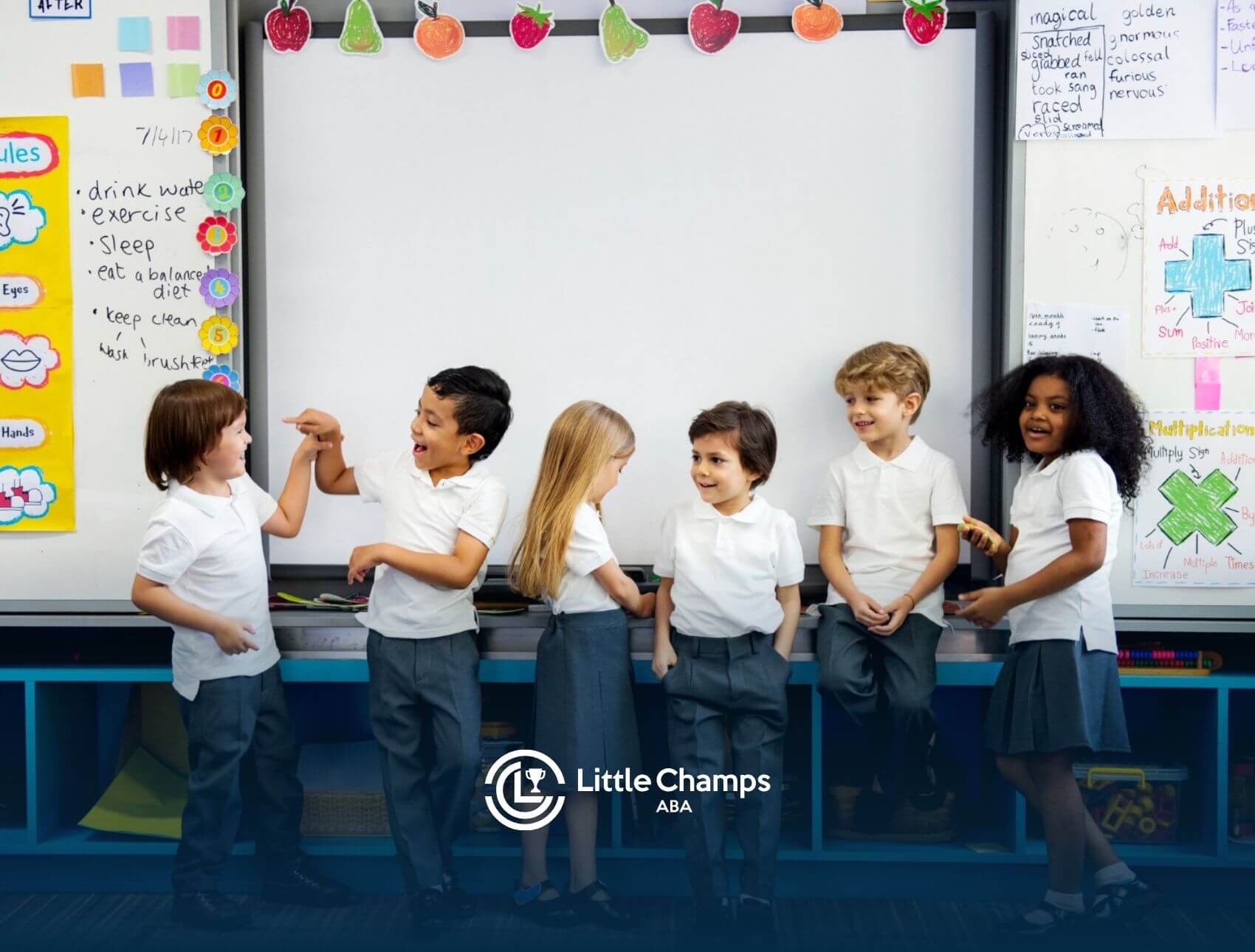
Many parents ask: should kids with autism go to public school?
The short answer is yes—many children with autism can succeed in public school. But whether it’s the right choice depends on your child’s needs, the support available, and how well the environment fits them.
In my experience working with families at Little Champs, public school can be a great option when the right supports are in place. I’ve also seen situations where adjustments—or different settings—were necessary. The decision isn’t about “public vs private.” It’s about finding the environment where your child can learn, communicate, and feel supported.
Benefits of Public School for Children with Autism
Public schools can offer valuable opportunities, especially when services are implemented effectively.
Most children with autism in public school receive support through an Individualized Education Program (IEP), which may include:
- Speech and language therapy
- Occupational therapy
- Behavioral support services
- Classroom accommodations
- Access to peer interaction and social learning
I’ve seen children build communication and social skills more naturally in school settings simply because they’re surrounded by peers and daily routines.
Challenges of Public School for Autism
At the same time, public school isn’t automatically the best fit for every child.
Some common challenges I see in practice include:
- Large class sizes with limited individual attention
- Sensory overload from noise, movement, and unpredictability
- Difficulty with transitions and structured schedules
- Inconsistent implementation of support plans
For some children, these challenges can lead to frustration, avoidance, or behaviors that interfere with learning.
How ABA Therapy Supports Kids with Autism in School
This is where additional support can make a meaningful difference.
Through school-based ABA therapy, we work directly within the classroom to help children succeed in real-time. Instead of removing them from the environment, we support them within it.
In practice, that often includes:
- Teaching functional communication (asking for help, breaks, or clarification)
- Supporting transitions between activities
- Reducing behaviors that interfere with learning
- Increasing independence and participation
When support is consistent, I often see children become more confident and engaged in school over time.
Public school for autism tends to work well when a child:
- Can participate in a structured group setting (with support if needed)
- Benefits from peer interaction and modeling
- Has an IEP that is practical and consistently followed
- Has access to additional supports when necessary
I’ve worked with children who started with significant challenges but gradually became more independent as the right supports were put in place.
There are also situations where families explore other options, such as private programs or specialized schools.
This usually happens when:
- The child is frequently overwhelmed or dysregulated
- Progress is limited despite support
- Safety or participation becomes a concern
- The environment isn’t flexible enough to meet their needs
These decisions are highly individualized. What works for one child may not work for another—and that’s okay.
One thing I consistently see is that progress improves when skills are supported across environments—not just at school.
Many families I work with combine school support with ABA therapy at home. This allows children to practice communication, routines, and regulation in a familiar setting, which often carries over into school.
For families needing flexibility, telehealth ABA can also provide guidance and parent coaching to support consistency.
So, should kids with autism go to public school?
For many children, yes—with the right supports in place. But the best choice is the one that allows your child to make meaningful progress, feel supported, and participate in daily life.
There’s no one-size-fits-all answer. What matters most is how well the environment matches your child’s needs—and how effectively support is provided.
If you’re navigating this decision, you don’t have to figure it out alone. Connect with Little Champs ABA to explore how we can support your child at home, in school, or both.
FAQs
1. Should kids with autism go to public school?
Yes, many children with autism can succeed in public school with the right supports in place. The key is ensuring the environment meets the child’s individual learning, communication, and behavioral needs.
2. Is public school good for children with autism?
Public school can be a good fit when appropriate services—like an IEP, speech therapy, or behavioral support—are consistently implemented. Some children benefit from peer interaction and structured routines.
3. What support do children with autism get in public school?
Support may include special education services, accommodations, speech therapy, occupational therapy, and behavioral support such as school-based ABA therapy.
4. When is public school not the right fit for autism?
Public school may not be ideal if a child is consistently overwhelmed, not making progress, or unable to safely participate—even with support. In those cases, alternative settings may be considered.
5. Can ABA therapy help children succeed in public school?
Yes. ABA therapy can support communication, behavior, and independence in school settings. Many families also use ABA therapy at home to reinforce skills across environments.
Sources: