


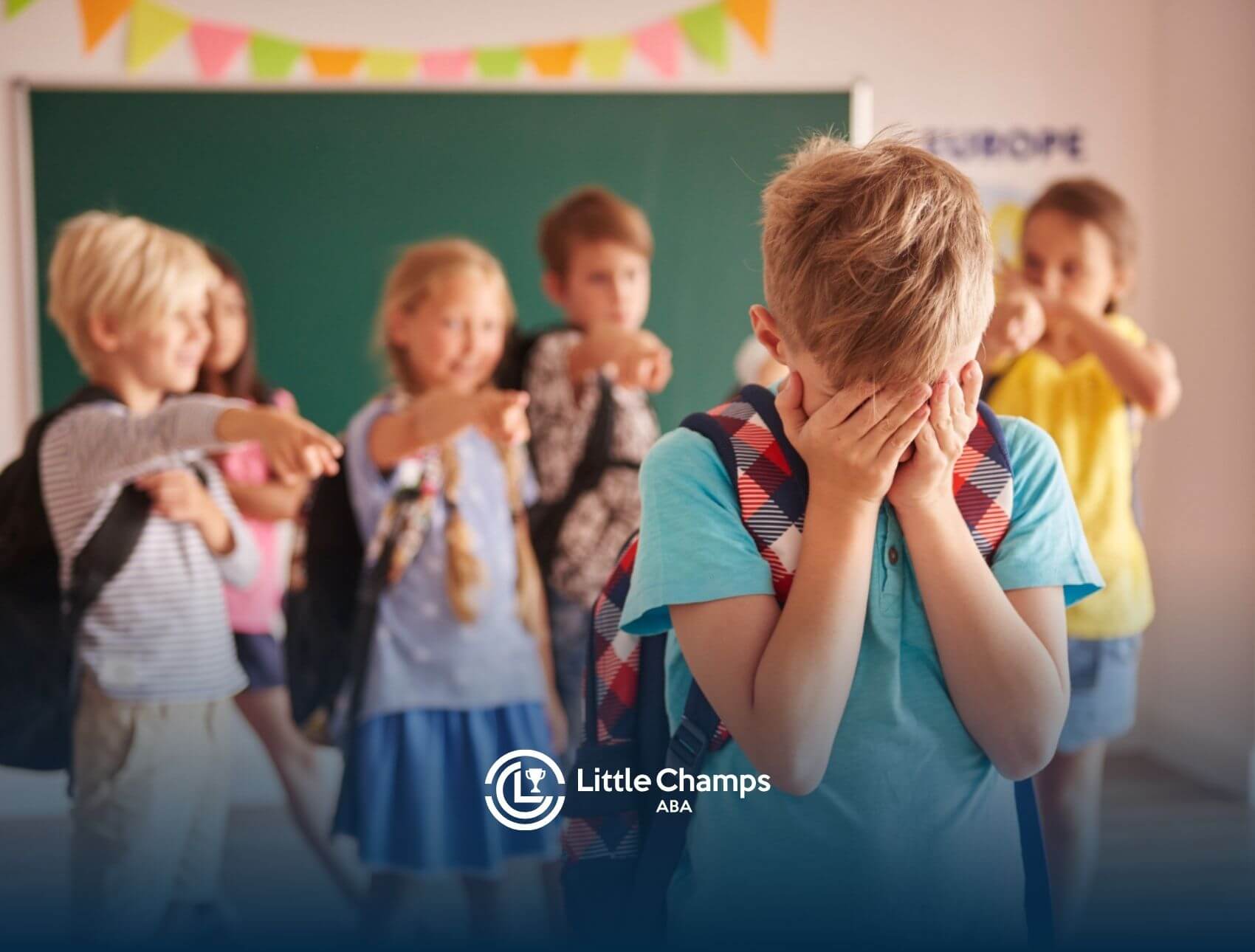
Bullying and autism intersect in ways that many families never fully anticipate until their child begins struggling emotionally, socially, or behaviorally.
Over the years at Little Champs ABA, I’ve worked with children who became anxious every Sunday night because school was approaching, teenagers who stopped participating in classroom discussions after repeated teasing, and young kids who believed peers were their friends even while being mocked openly.
One of the hardest parts for parents is realizing that bullying does not always look the way people expect. It is not always physical aggression or direct name-calling. For autistic children, bullying is often subtle, repetitive, and emotionally confusing. A child may be excluded from games every day but still think classmates like them. Another may become the target of jokes because they stim, speak differently, or react strongly to sensory discomfort.
Families often notice the effects long before they know the cause. Increased meltdowns, emotional shutdowns, school refusal, anxiety, irritability, regression in communication skills, or changes in sleep patterns can all signal that something deeper is happening socially.
Parents deserve more than vague advice like “teach them to ignore it.” Children with autism benefit from direct support, emotional validation, practical safety strategies, and environments that help them feel secure without asking them to hide who they are.
Why Children With Autism Are More Likely to Experience Bullying
Autistic children are not bullied because they lack value or capability. In many cases, they are targeted because peers notice differences in communication, behavior, emotional expression, or sensory regulation.
Children with autism may:
- Interpret language literally
- Miss subtle social cues
- Struggle with reciprocal conversation
- Become highly focused on specific interests
- Respond strongly to noise, touch, or transitions
- Have difficulty recognizing social manipulation
- Communicate emotions differently
- Experience delayed social processing
Unfortunately, peers sometimes exploit these vulnerabilities.
In clinical practice, I’ve seen children become recurring targets simply because they visibly reacted to teasing. Once peers realized a child became distressed easily, the behavior intensified unless adults intervened consistently.
Social Challenges Can Create Additional Vulnerabilities
Many autistic children genuinely want friendships and social connection. However, social interaction may feel unpredictable or difficult to navigate.
Some children:
- Assume peers are being honest when they are actually mocking them
- Continue trying to interact with children who repeatedly exclude them
- Copy inappropriate behaviors to gain acceptance
- Struggle to identify “fake friendships”
- Have difficulty recognizing online manipulation
One middle-school student I worked with thought classmates liked him because they encouraged him to perform silly behaviors during lunch. Later, he discovered they had been recording him and sharing videos online. Situations like this can deeply impact self-esteem, trust, and willingness to engage socially.
What Bullying Can Look Like for Autistic Children
Bullying is not always obvious. Some children experience overt harassment, while others experience subtle exclusion or manipulation that adults overlook.
Common Forms of Bullying
Autistic children may experience:
- Verbal teasing
- Social exclusion
- Public embarrassment
- Cyberbullying
- Physical intimidation
- Manipulation disguised as friendship
- Mocking of stimming or speech patterns
- Imitation or ridicule
- Coercion into inappropriate behavior
Children who struggle socially may also become scapegoats in group situations because they have difficulty defending themselves or explaining events clearly afterward.
Cyberbullying and Online Safety Concerns
For teenagers especially, social challenges often extend into online spaces.
Many autistic teens:
- Interpret online communication literally
- Miss sarcasm or deceptive intent
- Overshare personal information
- Trust peers too quickly
- Have difficulty recognizing unsafe online behavior
I’ve worked with teens who unknowingly participated in humiliating online interactions because they believed peers were genuinely engaging with them positively.
Parents should maintain open conversations about:
- Safe online behavior
- Privacy boundaries
- Recognizing manipulation
- Appropriate communication
- When to seek adult help
Signs Your Child May Be Experiencing Bullying
Many autistic children do not verbally disclose bullying immediately. Some cannot clearly explain social interactions, while others fear retaliation or embarrassment.
Instead, distress often appears behaviorally first.
Emotional and Behavioral Warning Signs
Parents may notice:
- Increased meltdowns
- Emotional shutdowns
- School refusal
- Anxiety before social events
- Difficulty sleeping
- Regression in communication
- Aggression at home
- Withdrawal from favorite activities
- Physical complaints like headaches or stomachaches
- Increased irritability
- Avoidance of specific classmates or environments
Some children begin masking heavily to avoid drawing attention to themselves socially.
The Emotional Effects of Bullying on Autistic Children
Bullying affects far more than social confidence. It can significantly impact emotional regulation, mental health, and self-identity.
Anxiety and Hypervigilance
Many children become constantly alert for signs of rejection or teasing. I’ve worked with children who scanned classrooms every morning to determine where “safe” peers were sitting before entering.
This hypervigilance can lead to:
- Chronic anxiety
- Difficulty concentrating
- Emotional exhaustion
- Panic around social settings
- Increased sensory overwhelm
Masking and Emotional Exhaustion
Masking refers to suppressing natural autistic behaviors to appear more socially accepted.
Some children begin:
- Hiding stimming behaviors
- Avoiding special interests publicly
- Rehearsing conversations constantly
- Forcing eye contact
- Mimicking peers excessively
While masking may reduce visible differences temporarily, it often increases emotional burnout and stress.
I’ve seen children come home from school completely depleted because they spent the entire day trying not to appear “different.”
Long-Term Self-Esteem Challenges
Repeated bullying can shape how children view themselves.
Without strong support systems, some children begin believing:
- They are unlikeable
- Their differences are wrong
- Friendships are unsafe
- They should suppress their personalities
That emotional impact can continue into adolescence and adulthood if left unaddressed.
How Parents Can Respond Supportively
Parents understandably want to protect their children immediately, but the first priority is emotional safety and trust.
Validate Before Problem-Solving
Children need to feel believed before they feel ready to problem-solve.
Helpful responses include:
- “I’m glad you told me.”
- “That sounds really painful.”
- “You didn’t deserve that.”
- “We’ll work through this together.”
Avoid minimizing statements like:
- “Just ignore them.”
- “Everyone gets teased.”
- “You’re too sensitive.”
Even well-intentioned comments can unintentionally increase shame.
Ask Specific Questions
Broad questions can overwhelm autistic children.
Instead of:
- “What happened today?”
Try:
- “Who were you sitting with?”
- “What happened before recess?”
- “What did they say next?”
- “How did your body feel?”
Concrete questions often help children communicate more effectively.
Focus on Safety Skills, Not Forced Socialization
The goal is not to make children appear neurotypical. The goal is helping them feel safe, confident, and capable of advocating for themselves.
Helpful skills may include:
- Identifying trusted adults
- Recognizing unsafe behavior
- Understanding boundaries
- Practicing assertive communication
- Leaving unsafe situations
- Requesting help appropriately
- Understanding online safety
How Schools Can Better Support Autistic Students
Schools play a major role in bullying prevention and intervention.
The strongest school teams I’ve collaborated with focused not only on discipline after incidents but also on prevention and inclusion.
Effective School Supports
Helpful accommodations and supports may include:
- Increased supervision during unstructured times
- Peer buddy systems
- Social skills groups
- Sensory-safe spaces
- Staff autism training
- Updated IEP or 504 accommodations
- Structured lunch or recess supports
- Clear reporting procedures
Parents should document concerns consistently and communicate in writing whenever possible.
Collaborating With Schools Effectively
Productive meetings usually focus on:
- Safety concerns
- Observable incidents
- Emotional impact
- Preventive supports
- Accountability measures
Approaching schools collaboratively often leads to stronger long-term support systems.
How ABA Therapy Can Support Children Experiencing Bullying
Modern ABA therapy focuses on meaningful life skills that improve independence, communication, emotional regulation, and safety.
At Little Champs ABA, we work closely with families to create individualized goals based on real-world challenges children experience socially, emotionally, and behaviorally.
Skills ABA Therapy May Help Strengthen
Therapy goals may include:
- Emotional identification
- Self-advocacy
- Flexible thinking
- Social awareness
- Coping strategies
- Boundary setting
- Perspective-taking
- Conflict resolution
- Emotional regulation
- Online safety awareness
One teenager I worked with struggled repeatedly with peers manipulating him socially online. Through structured practice, role-play, and emotional awareness training, he became significantly more confident recognizing unsafe situations and asking for help proactively.
Why Environment-Based ABA Support Can Be Helpful
Bullying challenges rarely happen in only one environment. Support is often most effective when children practice skills across home, school, daycare, and community settings.
At Little Champs ABA, we provide individualized ABA therapy services designed to support children in the environments where social challenges actually occur.
Our ABA Services Include
- ABA therapy at home
- ABA therapy in school
- ABA therapy in daycare
- ABA therapy for teenagers
- Telehealth ABA services
We proudly support families through:
Helping Children Rebuild Confidence After Bullying
Recovery takes time. Even after bullying stops, children may continue expecting rejection or feeling unsafe socially.
Practical Ways to Support Emotional Recovery
Parents can help by:
- Encouraging strengths-based activities
- Supporting identity and self-expression
- Creating low-pressure social opportunities
- Reinforcing self-advocacy attempts
- Avoiding pressure to “fit in”
- Maintaining predictable routines
- Celebrating small successes
Children often rebuild confidence gradually through consistent positive experiences.
I’ve seen tremendous growth when children discover environments where they feel accepted instead of constantly corrected or excluded.
When Additional Mental Health Support May Be Needed
Some children need broader emotional support beyond school accommodations or ABA therapy alone.
Families should seek additional support if they notice:
- Persistent sadness
- Severe anxiety
- Panic symptoms
- Self-harm statements
- Aggression
- Sleep disruption
- Significant withdrawal
- School refusal
- Major behavioral changes
Collaborating with pediatricians, psychologists, schools, and therapy providers can help create stronger long-term support systems.
Supporting Your Child Without Asking Them to Hide Who They Are
One of the most important things I’ve learned working with autistic children is that true support is not about teaching children to erase their differences. It is about helping them build safety, confidence, communication skills, emotional resilience, and supportive relationships while still feeling accepted as themselves.
Children deserve environments where they do not have to constantly mask, suppress interests, or fear social rejection simply for being different.
At Little Champs ABA, we work closely with families across Colorado and Utah to help children strengthen emotional regulation, communication, social confidence, and self-advocacy through compassionate, individualized ABA therapy.
Whether your child needs support at home, in school, in daycare settings, during adolescence, or through telehealth services, our team focuses on practical, evidence-based care designed to improve everyday quality of life.
Contact Little Champs ABA today!
FAQs About Bullying and Autism
Are autistic children more likely to experience bullying?
Yes. Research consistently shows autistic children experience higher rates of bullying than neurotypical peers due to communication differences, sensory sensitivities, and social vulnerabilities.
Why do some autistic children struggle to report bullying?
Some children have difficulty interpreting social situations, identifying manipulation, recalling events clearly, or communicating emotional experiences verbally.
Can bullying increase meltdowns or emotional dysregulation?
Absolutely. Chronic stress, anxiety, and hypervigilance from bullying can significantly affect emotional regulation and behavior.
Can ABA therapy help children manage bullying situations?
ABA therapy can help children strengthen self-advocacy, communication, emotional regulation, social awareness, and practical safety skills.
What should schools do to support autistic students?
Schools can improve support through staff training, supervision, sensory accommodations, peer education, social groups, and individualized safety planning.
What is masking?
Masking involves suppressing natural autistic traits or behaviors to appear more socially accepted. While common, excessive masking can contribute to emotional exhaustion and anxiety.
Are autistic teenagers vulnerable to online bullying?
Yes. Many autistic teens interpret online communication literally and may struggle recognizing manipulation, sarcasm, or unsafe online interactions.
Sources:
- https://cyberbullying.org/helping-kids-autism-spectrum-disorder-bullied-cyberbullied
- https://pmc.ncbi.nlm.nih.gov/articles/PMC7158962/
- https://dcp.ucla.edu/tiktok-cyberbullying-attacks-against-autism-community
- https://pmc.ncbi.nlm.nih.gov/articles/PMC5886362/
- https://www.autismspeaks.org/bullying-prevention