


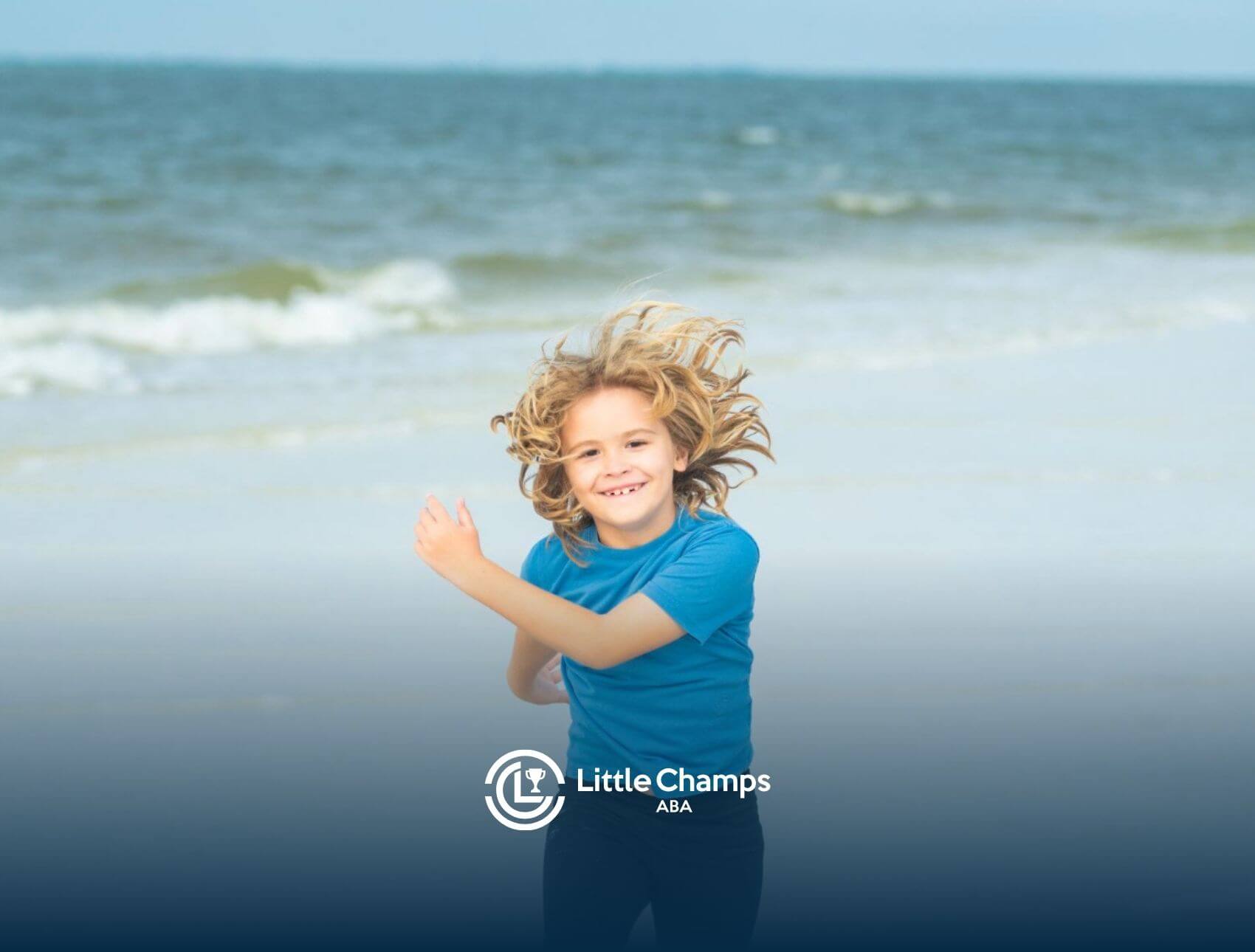
Summer is here, and if you’re already feeling a mix of excitement and anxiety about that upcoming beach or lake trip, you’re not alone. I’ve worked with dozens of families navigating exactly this—and the truth is, preparing your autistic child for a beach or lake trip isn’t just possible. It can be genuinely wonderful with the right approach.
Water, sand, sun, crowds, and unpredictability—beaches and lakes are sensory-rich environments that can feel overwhelming for many children with autism. But with intentional preparation rooted in what we know about sensory processing and behavior, these outings can become highlights of the summer rather than sources of dread.
Here’s what I’ve seen work, and what our team at Little Champs ABA recommends based on real clinical experience.
Understanding Why Beaches and Lakes Are Challenging for Autistic Children
Before diving into preparation strategies, it helps to understand what’s actually happening neurologically for many kids with autism in these environments.
Sensory Overload Is the Core Challenge
Beaches and lakes offer a perfect storm of sensory input: the roar of waves, gritty sand underfoot, bright glare off the water, cold water, sunscreen textures, wet clothing, and the unpredictable movement of other people. For a child whose nervous system processes sensory information differently, this can shift from exciting to unbearable within minutes.
One child I worked with—a bright, curious seven-year-old—loved watching ocean documentaries at home but would cover his ears and refuse to leave the car at the beach. The gap between knowing the beach and experiencing it was enormous. Preparation helped bridge that gap.
Unpredictability Adds to the Stress
Routine is regulating for many autistic children. Beaches don’t have schedules. Waves don’t ask permission. Other kids run by without warning. This unpredictability can dysregulate even a child who manages well in structured settings.
This is where proactive, ABA-informed preparation becomes critical—not just packing the right bag, but building a mental map for your child before you ever leave the driveway.
How to Prepare Your Autistic Child for a Beach or Lake Trip Before You Go
Preparation starts well before the day of the trip. The more familiar the experience feels, the less taxing the actual outing becomes.
Use Visual Supports and Social Stories
Create a simple visual story about what the beach or lake will look and feel like. Include photos of the actual location if possible. Walk through the sequence: “First we drive. Then we park. Then we walk to the sand. Then…” Predictability is calming.
This isn’t just a parenting hack—it’s grounded in evidence-based practice. Visual supports have decades of research behind them as effective tools for reducing anxiety and increasing cooperation in autistic children.
Do a Sensory Preview at Home
Bring the sensory experience to your living room first. Let your child feel sand in a small bin, play with cool water in a kiddie pool, practice wearing sunscreen on small patches of skin. Each exposure, done without pressure, reduces the novelty factor on the actual day.
If sunscreen is a significant issue—and it often is—try unscented mineral formulas applied with a brush applicator. Give your child as much control over the application process as possible.
Talk Through the Plan Together
Walk your child through what will happen, what choices they’ll have, and what the exit plan looks like. “If it gets too loud, we can go sit in the car for a break.” Having an escape route—and knowing about it in advance—reduces panic when sensory input spikes.
What to Pack for a Sensory-Friendly Beach or Lake Day
The right gear can be the difference between an hour at the beach and a full afternoon. Here’s what I recommend having on hand:
- Noise-canceling headphones or ear protection
- Sunglasses with UV protection (try polarized lenses to reduce glare)
- Rash guard instead of traditional sunscreen if skin sensitivity is a major issue
- Familiar snacks and drinks from home
- A designated ‘calm spot’—a pop-up tent or umbrella with a comfortable chair or blanket
- Fidget tools or a favorite sensory toy
- A visual schedule for the day
- Extra dry clothes—multiple changes
- Waterproof phone case for visual timers and communication apps
Don’t underestimate the power of familiar food. A child who’s already dysregulated will not try new snacks. Pack what they love.
Autism-Friendly Activities at the Beach or Lake
Not every autistic child will wade into the water, and that’s completely okay. The goal isn’t to force a ‘typical’ beach experience—it’s to find the version that works for your child.
Start at the Edge, Not the Center
Begin at a distance from the water and the main crowd. Let your child observe first. Some kids need 30–45 minutes just to acclimate before they’re ready to engage. Rushing this phase usually backfires.
Follow Their Lead With Water
Some children will love playing with shallow waves at their ankles; others will be happiest digging in dry sand well away from the water’s edge. Let curiosity guide the exploration rather than a predetermined plan of what a beach trip “should” look like.
Structured Play Within an Unstructured Setting
Bring containers, shovels, molds, and similar items that introduce structure into sand play. A child building a specific sandcastle with specific tools is engaged and regulated. Open-ended “just play” can feel vague and stressful.
Use Natural Breaks Strategically
Build in predictable breaks before your child shows signs of overload. A snack break in the shade every 45 minutes is far better than trying to recover from a full meltdown. Proactive regulation beats reactive damage control every time.
Recognizing Early Signs of Sensory Overload
One of the most valuable skills a parent can develop is reading their child’s early dysregulation cues before things escalate. These can include:
- Increased stimming (hand-flapping, rocking, vocalizing)
- Covering ears or eyes
- Refusing to move or becoming rigid
- Irritability, whining, or increased demands
- Seeking to go back to a familiar space (car, tent, etc.)
When you see these signs, act early. Move to the calm zone, offer a preferred snack or activity, reduce input, and give your child time to regulate before continuing. Catching it early makes recovery much faster.
How ABA Support Can Help Your Child Thrive in New Environments
A lot of the strategies I’ve described above—visual schedules, sensory desensitization, proactive regulation, systematic exposure—aren’t things parents have to figure out alone. This is exactly the kind of work our clinical team does every day.
At Little Champs ABA, we serve families across Colorado and Utah, offering a range of service settings designed to meet your child wherever they are—literally and figuratively.
Our services include:
- Center-Based ABA Therapy — Structured sessions in a supportive clinical environment
- In-Home ABA Therapy — Practice skills in the environment where your child feels safest
- School-Based ABA Therapy — Generalize skills into academic settings
- Daycare ABA Therapy — Support during typical childcare hours
- ABA Therapy for Teenagers — Age-appropriate goals for older learners
- Telehealth ABA — Flexible support from anywhere
If your child is struggling with community outings, sensory environments, or new experiences, our BCBAs can develop a plan specifically targeting those challenges—including outing preparation protocols and in-vivo community practice.
Reach out to Little Champs ABA today!
Frequently Asked Questions
How do I know if my child is ready for a beach trip?
Readiness isn’t about age—it’s about preparation. If your child can tolerate novel environments with support, responds to a visual schedule, and has a calm-down strategy in their toolkit, they can have a meaningful experience at the beach. Start with short visits and build from there.
What if my child refuses to leave the car?
Don’t force it. Sitting in the car near the beach is a valid first step. Let your child observe from a safe distance. Over multiple visits, many children naturally become curious enough to explore. Pressure accelerates avoidance.
Is sunscreen really that big a deal for kids with autism?
For many children with tactile sensitivities, yes—sunscreen can be a genuine barrier. Try spray formulas, unscented options, or sun-protective clothing as alternatives. Work with your OT or BCBA on desensitization if it’s a significant issue.
My child loves water at home. Why do they refuse the ocean?
The sensory profile of a bathtub versus the ocean is dramatically different. Waves, cold temperature, sand, salt, and sound are all new variables. Familiarity with water at home is a great foundation—it just needs to be generalized gradually to natural water settings.
Sources:
https://www.autism.org.uk/advice-and-guidance/about-autism/repeated-movements-and-behaviour-stimming
https://www.autismspeaks.org/blog/autism-friendly-holidays-tips-make-sure-all-calm-when-all-bright
https://www.autismspeaks.org/blog/tips-autistic-people-make-holidays-happy