



By one o’clock on opening day we were out of blue face paint, and our sensory gym had not been empty for a single minute since we unlocked the doors.
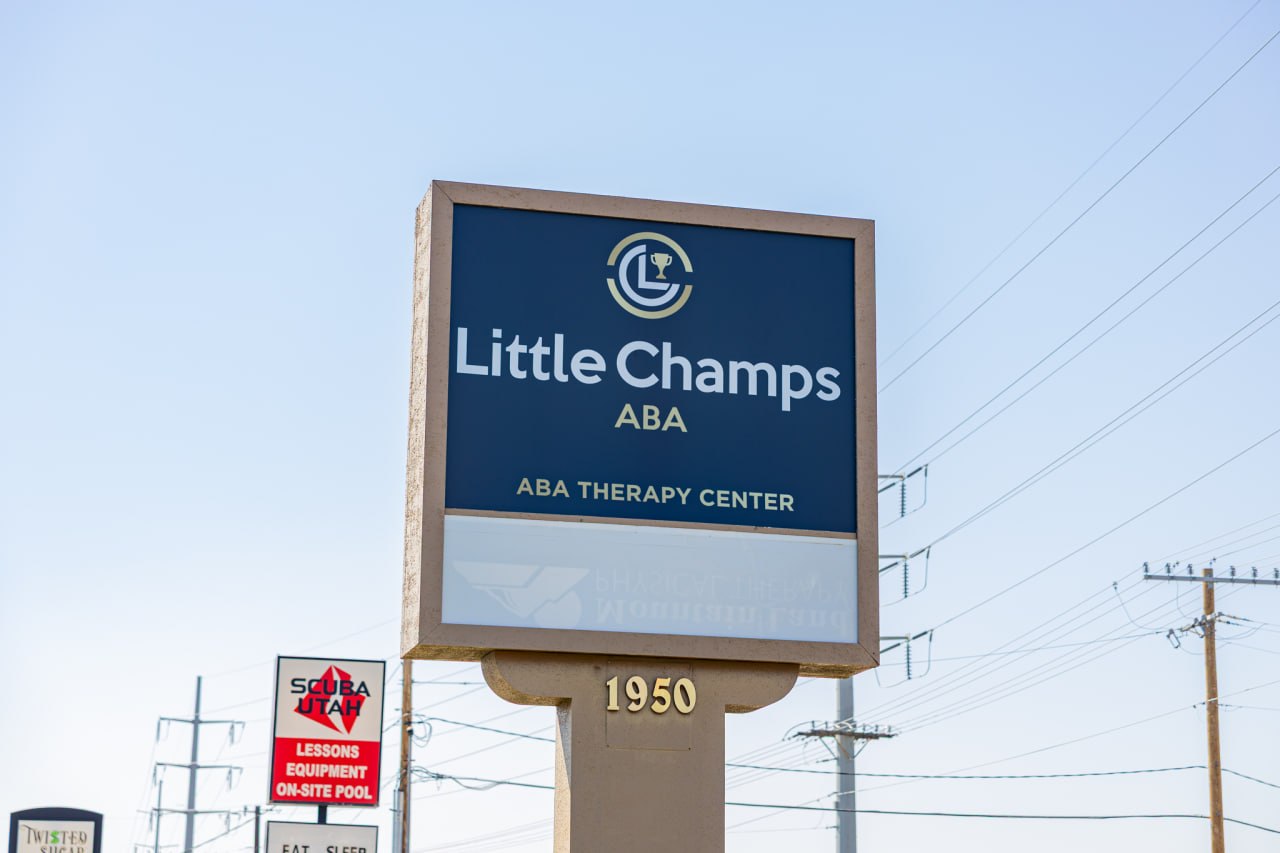
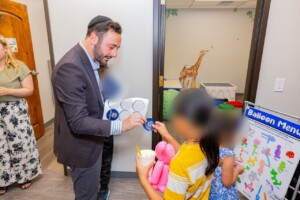
We opened our Cottonwood Heights center at 1950 East Fort Union Blvd on August 3, with a ribbon cutting out front and an open house that anyone was welcome to walk into. There was balloon art, there were snow cones, and there was a toy table that lasted maybe two hours. But the part we had been nervous about was the tours, because we spent months on this building and that day was the first time anyone outside our team got to judge it.


The Rooms Everyone Wanted to See
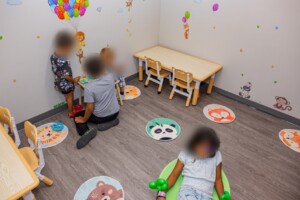
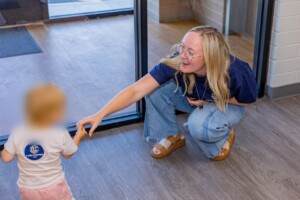
Our sensory gym is the largest room we have, and it is the one families gravitated toward. Swings, crash pads, a climbing structure, and open floor for the kind of movement kids need before anything else can happen. Plenty of parents called it the play room, and we loved getting to explain that it is where a great deal of the real work happens.
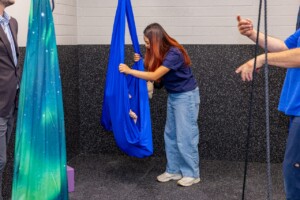
We believe that for many of the children we serve, movement is not a break from learning. It is also the thing that makes learning possible. A child who cannot sit at a table for a single request will often meet the exact same goal mid-swing, once their body finally has what it was asking for.
It is where we do pairing, the gentle early stretch when a new technician simply becomes someone a child is glad to see, before anyone asks them for anything at all.
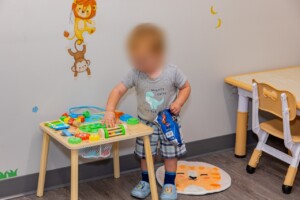
Every therapy room has its own theme, which is genuinely fun on a tour and quietly useful the rest of the time. Transitions get easier when a destination is distinct, because “we’re going to the space room” is a much friendlier sentence than “we’re going to room four.” A consistent room helps our newest learners build a sense of what happens there, which takes the edge off walking in.
And because our rooms differ from one another, we can carry a skill a child has mastered into a new one and see whether it holds, which is how we know it is truly theirs. We took the decals off two rooms during setup because they felt busy when we walked through, and a themed room should still be a calm one.
Our quiet rooms sit apart from the gym on purpose, with dimmable lighting, soft surfaces, and almost nothing on the walls. They are always a place a child can ask to go and never a place we send them, because a child who learns to notice what their body needs and speak up about it has something they will carry for the rest of their life.
That design showed up in small ways all day. A little boy circled the sensory gym three times before he went in while his mom apologized for how long it was taking, and she truly did not need to. A mom asked us, almost in a whisper, whether her daughter could take her shoes off, because somebody had told her no somewhere before. The answer here is yes, and that is a design decision as much as the lighting is.
We owe the day to Anai Perez, our Operations Manager and Lead RBT, who planned everything down to the order the tour groups moved so the gym never got overwhelming, and to Kelsey Anderson, our Regional BCBA for Utah, who spent the afternoon walking families through what supervision looks like and what the first weeks with a new provider really feel like.
Choosing the Right ABA Setting for Your Child
As proud as we are of this building, it is one setting among several, and we would rather help you choose well than talk you into the room we just finished. A center is wonderful for peer work, group instruction, structured routines, and getting ready for a classroom.
Home is often the faster path for toileting, mealtimes, bedtime, and sibling dynamics, because those goals live in the actual bathroom and at the actual dinner table. Many of our families do a bit of both, and that is a very good option.
Across Utah, here is where our team works:
- Center-based ABA therapy in Cottonwood Heights, Salt Lake City, and Park City
- ABA therapy at home across the Wasatch Front
- ABA therapy in school alongside your child’s classroom team
- ABA therapy in daycare for our youngest learners
- ABA therapy for teenagers focused on independence and self-advocacy
- Telehealth ABA for parent coaching and families further out
Photos only tell you so much about a space like this. We are on Fort Union, a short drive from Holladay, Midvale, Sandy, Murray, and Millcreek, and we give tours every weekday. Call us at 385-494-3500, take a look at the center, or reach out here to set up a tour.
FAQs
1. Where is the new Little Champs ABA center in Cottonwood Heights?
Our Cottonwood Heights ABA center is located at 1950 East Fort Union Blvd, with easy access from Holladay, Midvale, Sandy, Murray, and Millcreek.
2. What does the Cottonwood Heights ABA center include?
The center includes a large sensory gym, themed therapy rooms, quiet spaces with dimmable lighting, and areas designed for both individual learning and movement-based activities.
3. What is the sensory gym used for during ABA therapy?
The sensory gym gives children space to move, regulate, play, and work toward therapy goals in a setting that feels natural and engaging.
4. Does Little Champs offer ABA therapy outside the center?
Yes. In addition to center-based ABA therapy, Little Champs offers in-home, school-based, daycare, teen, and telehealth ABA services across Utah.
5. Can parents tour the Cottonwood Heights ABA center before starting therapy?
Yes. Families can schedule a weekday tour, see the therapy spaces, meet the team, ask questions, and bring their child along.