
A few months back, a mom in Columbus told me her son had quit three different activities before age eight, soccer, Cub Scouts, and a beginner guitar class, and she was starting to wonder if extracurriculars just were not for him.
That is a story I hear more than almost any other at Little Champs ABA. Finding autism-friendly extracurriculars can feel like a series of failed experiments when nobody involved knew how to adjust.
The truth is, the right sport, music program, or club is often still out there. It just takes knowing what to look for and how to prepare.
Why Extracurriculars Support the Skills You Are Already Working On
Extracurricular activities are not separate from the work we do in ABA therapy. They are often where that work gets tested. A child who has learned to wait their turn at the table with their RBT gets a real chance to practice that skill on a bench during a soccer game. The stakes look different outside the therapy room, and that is exactly why these settings are so valuable.
Practicing Skills Where They Actually Count
Skills taught in a controlled setting do not always show up automatically somewhere else. This is called generalization, and it is one of the biggest goals of quality ABA programming. A child who can label emotions during a session but freezes up when a teammate grabs the ball they wanted needs practice in that specific moment, with that specific kind of frustration. Clubs, sports, and music groups give kids low-stakes chances to use these skills for real.
Building Genuine Friendships, Not Just Structured Interactions
Parents often tell me their child has plenty of adult support but very few peer relationships. Shared-interest activities, like a robotics club or a drum line, put kids next to peers who like the same things they do. That shared interest becomes the bridge, and friendship tends to follow much more naturally than it does in a setting built around forced small talk.
Finding Autism-Friendly Sports Programs
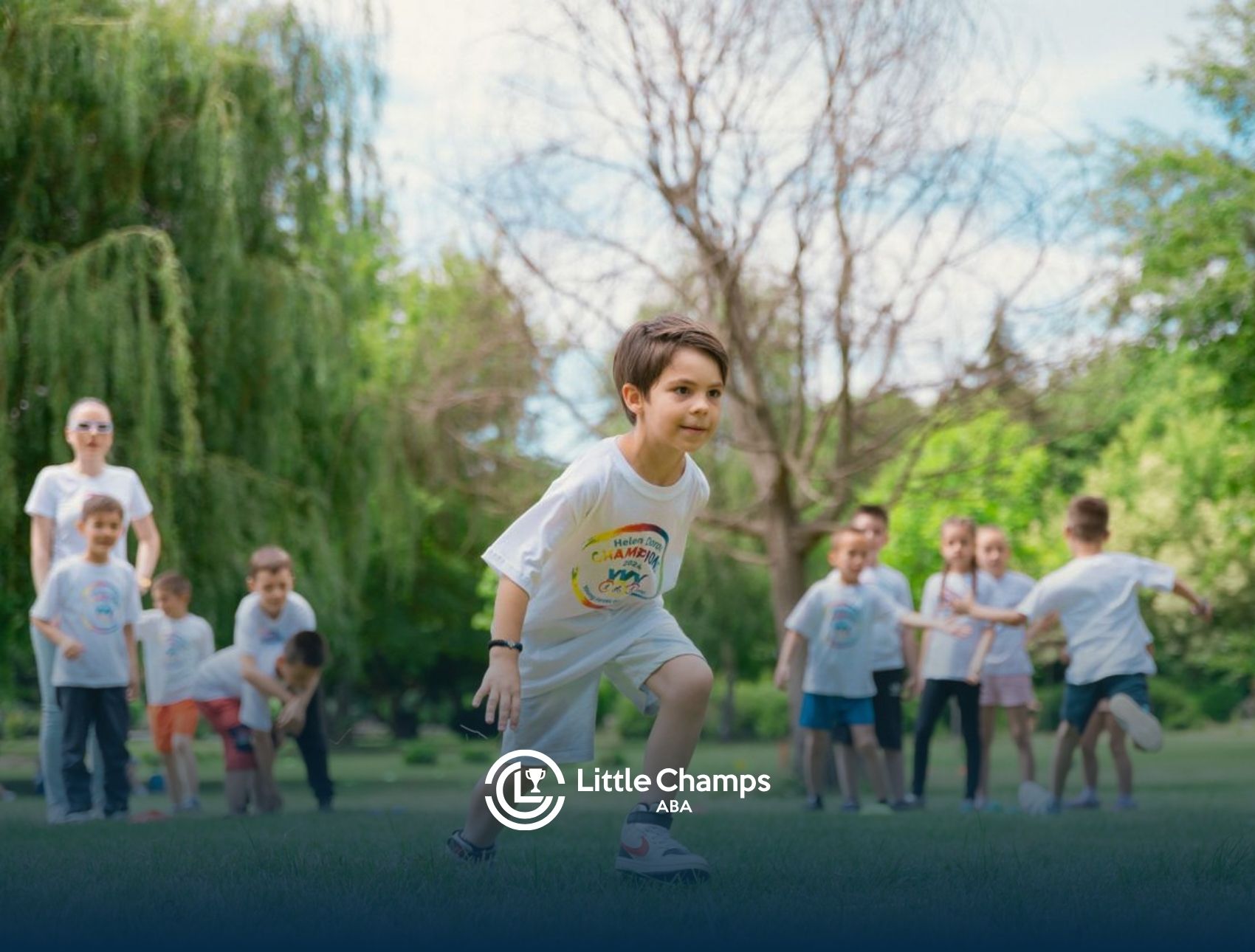
Sports get a bit of a bad reputation among autism parents, usually because of one rough tryout or a coach who ran out of patience. The sports world has changed quite a bit, though, and many programs now build in the flexibility that neurodivergent kids need.
Individual Sports Often Come First
Swimming, martial arts, climbing, track, and gymnastics let a child focus on their own performance without needing to track a moving ball, a moving teammate, and a moving opponent all at once. Many families find these are a gentler entry point before trying a team sport, since the sensory and social demands are lower and the schedule tends to be more predictable.
Team Sports Can Work With the Right Modifications
Team sports are not off the table, either. Look for leagues that describe themselves as inclusive, adaptive, or sensory-friendly, and ask direct questions before signing up. Will there be a smaller roster? Can my child have a consistent buddy or aide? Is there a quiet space if things get overwhelming? A coach who welcomes these questions is usually a coach worth trying.
What to Ask Before You Enroll
- How many kids are typically on a team, and what the coach-to-player ratio looks like
- Whether the coach has experience working with autism, ADHD, or sensory needs
- What a typical practice actually looks like from start to finish
- Whether a trial class or observation is available before you commit
Music and Creative Arts Programs for Neurodivergent Kids
Music has a structure to it that many autistic kids gravitate toward naturally: counts, patterns, repetition, and clear beginnings and endings. It also offers a form of expression that does not require spoken language to be meaningful.
Sensory-Friendly Music Classes
Look for classes that offer adjustable volume, smaller group sizes, and instructors who are comfortable with stimming, noise-canceling headphones, or a child who needs to move around the room. Community music schools and some occupational therapy clinics have started offering exactly this kind of class.
Why Rhythm and Repetition Help
Predictable rhythm gives the brain something steady to anchor to, which can be genuinely calming for a child who finds unpredictability stressful. I have watched kids who struggled to sit through a five-minute activity stay engaged for a full thirty-minute drum circle, simply because the pattern gave them something to hold onto.
Clubs and Social Groups That Welcome Different Learners
Not every child wants to run or sing, and that is completely fine. Clubs built around a specific interest, like chess, coding, art, Lego building, or animals, tend to draw in kids who think a little differently to begin with.
Special Interest Clubs
A child who can talk for twenty minutes about dinosaurs or trains often finds a club built around exactly that topic to be the first place they feel truly understood by peers. Libraries, community centers, and some schools run these clubs specifically because they know how much it helps.
Scouting and Structured Community Programs
Scouting organizations have made real strides toward inclusion in recent years, with some troops offering modified badge requirements and sensory-aware leaders. The structure, uniforms, ranks, and repeated routines tends to appeal to kids who do well with predictability.
Setting Your Child Up for a Strong First Few Weeks
The first two or three sessions of any new activity tend to make or break whether a child wants to go back. A little preparation goes a long way here.
Social Stories and Visual Schedules
A short social story that walks through what will happen, who will be there, and what the space looks like can lower anxiety significantly before day one. If your child works with a BCBA or RBT, ask them to help build one specific to the new activity.
Talking With Coaches and Instructors Ahead of Time
A five-minute conversation before the first session, sharing what helps your child, what might be hard, and one or two go-to strategies, can prevent a lot of first-day struggle. Most instructors want this information and appreciate a parent who offers it directly. If these conversations feel intimidating, our post on talking with teachers has language that tends to work well in similar conversations with new coaches and instructors.
How ABA Therapy Complements Extracurricular Success
A good chunk of the work we do with families is not only inside session. It is helping a child carry skills like turn-taking, following multi-step directions, and managing frustration into everyday spaces like a soccer field or a music classroom.
If your family is exploring extracurriculars and wants extra support building the underlying skills first, this is exactly the kind of work we do at Little Champs ABA. We provide ABA therapy across Georgia, Colorado, Utah, and Virginia in whatever setting fits your family best:
- Center-based ABA therapy
- ABA therapy at home
- ABA therapy in school
- ABA therapy in daycare
- ABA therapy for teenagers
- Telehealth ABA
And if your child struggles with peer interaction before ever setting foot on a field, some of the groundwork we lay in session, like practicing naming their emotions or working through a rough day at school as covered in our post on struggling at school, can make that first day of practice go a whole lot smoother.
If you are curious whether ABA therapy could help your child get more out of sports, music, or clubs, reach out to our team in Colorado or Utah. We would love to talk through what your child needs and build a plan around it.
Frequently Asked Questions
What if my child has already had a bad experience with a sports team or club?
One bad experience does not mean the next one will go the same way. Try to identify what specifically went wrong, whether it was sensory overload, unclear expectations, or an unprepared instructor, and look for a program that addresses that particular gap.
How do I know if my child is ready for a group activity?
Readiness is less about hitting a certain age and more about whether your child has some baseline skills for the setting, like tolerating noise for short stretches or accepting redirection from an adult who is not you. A BCBA can help assess this during an initial consultation.
Should I tell the coach or instructor about my child’s autism diagnosis?
Most families find it helpful to share relevant details, without needing to over-explain, so the adult in charge can set the child up for success from day one.
Are there scholarships or financial assistance for adaptive sports and activities?
Many adaptive sports leagues and community organizations offer reduced-cost or scholarship spots. It is worth asking directly, since these options are not always advertised on a program’s website.
How many activities should we try before finding the right fit?
There is no fixed number. Some families find the right activity on the first try, others need to try two or three before something clicks. Pay attention to how your child talks about it afterward. That is often the clearest signal of all.
Sources:
- CDC — Data and Statistics on Autism Spectrum Disorder https://www.cdc.gov/autism/data-research/index.html
- U.S. Department of Education, Office for Civil Rights — Disability Discrimination: Equal Access to Opportunities https://www.ed.gov/laws-and-policy/civil-rights-laws/disability-discrimination/disability-discrimination-key-issues/disability-discrimination-equal-access-opportunities
- PubMed (National Library of Medicine) — Extracurricular Activity Participation Among Autistic Children and Adolescents: Buffer for Internalizing Conditions and Foundation for Friendship? https://pubmed.ncbi.nlm.nih.gov/37898581/
- PMC (NIH/NLM) — Effects of Group Sports Activities on Physical Activity and Social Interaction Abilities of Children With Autism Spectrum Disorders https://pmc.ncbi.nlm.nih.gov/articles/PMC11840914/
- PMC (NIH/NLM) — Children with Autism Spectrum Disorder and Patterns of Participation in Daily Physical and Play Activities https://www.ncbi.nlm.nih.gov/pmc/articles/PMC4485548/
- PMC (NIH/NLM) — Cochrane Systematic Review: Music Therapy for People With Autism Spectrum Disorder https://www.ncbi.nlm.nih.gov/pmc/articles/PMC6956617/
- PMC (NIH/NLM) — Ins and Outs of ABA Intervention in Promoting Social Communicative Abilities in Children and Adolescents With ASD https://www.ncbi.nlm.nih.gov/pmc/articles/PMC12189890/
- NCHPAD (National Center on Health, Physical Activity and Disability) — Autism and Exercise https://www.nchpad.org/1399/6262/Autism~and~Exercise
- Autism Society — National Programs https://autismsociety.org/national-programs/
- CDC — Disability and Health National Programs (NCHPAD and Special Olympics) https://www.cdc.gov/disability-and-health-partners/php/about/index.html