


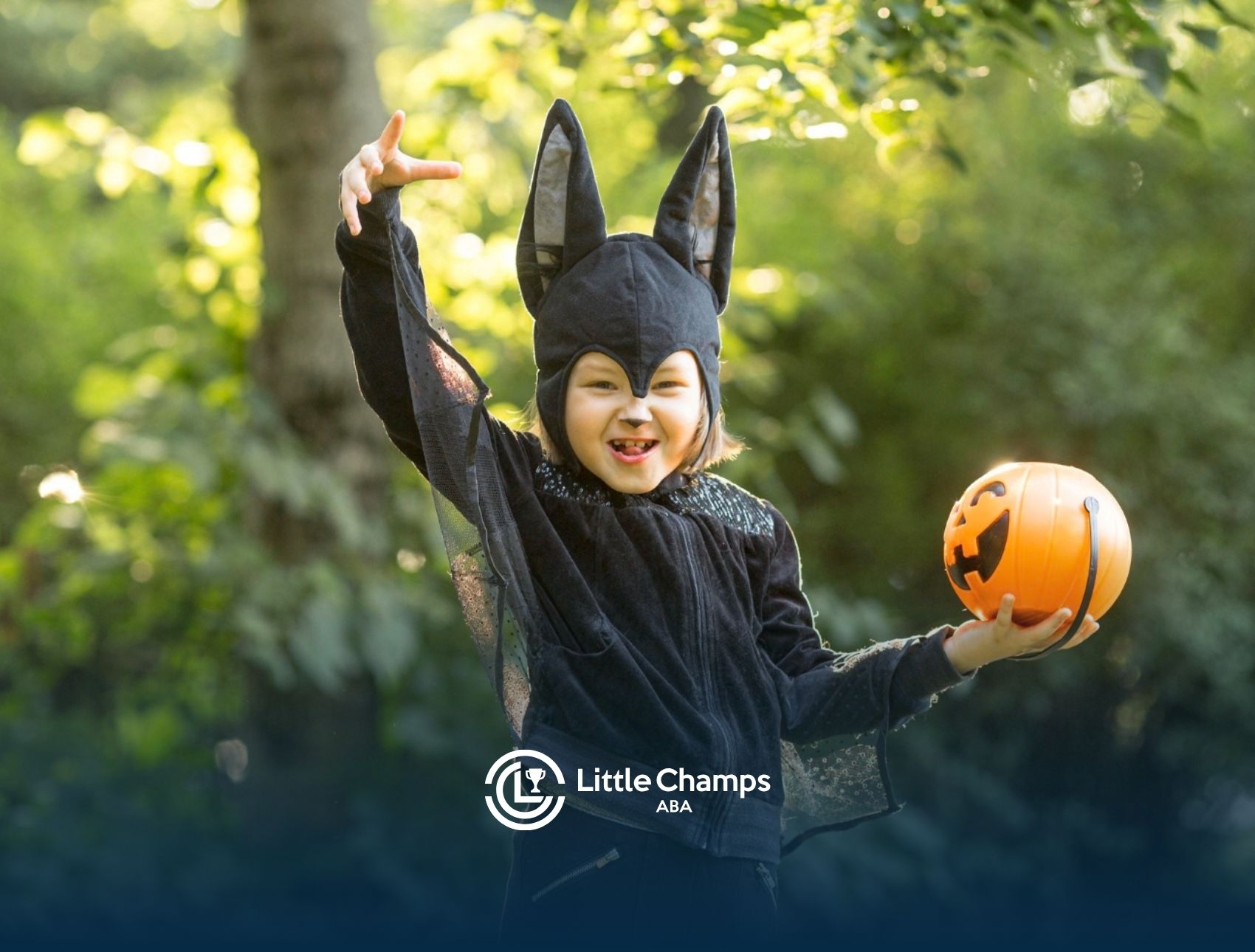
Halloween and autism can absolutely go together, but the night usually goes best with a plan. The most helpful steps are previewing what will happen, choosing a costume your child can tolerate, practicing trick-or-treating ahead of time, and deciding in advance how you will leave if things get to be too much. With Halloween falling on a Saturday this year, many families also have the option of daytime events.
Every October, parents tell me some version of the same worry. One father in Richmond described last year’s Halloween as “four houses and a meltdown on the sidewalk.” This year, his son practiced knocking on doors for two weeks, wore pajamas with a dinosaur hood, and came home proud with a bucket of candy. Small changes made the difference.
Below are the strategies I use with families, organized from the weeks before Halloween to the night itself.
Why Halloween Can Feel Overwhelming for Autistic Children
Halloween asks a lot of any child. For autistic kids, who often process sensory input and change differently, several challenges tend to arrive at once. Understanding what your child is reacting to makes it much easier to plan around it.
Sensory Input Stacks Up Quickly
Flashing lights, fog machines, motion-activated decorations, doorbells, barking dogs, crowded sidewalks, and unfamiliar smells can all happen within a single block. Researchers at the University of Alabama at Birmingham describe sensory overload as a common root of meltdowns, which is why reducing input is often the most effective prevention.
Changes to Routine and Social Rules
Halloween also flips everyday expectations. We teach children not to take candy from strangers, and then one night a year we ask them to knock on a stranger’s door and do it. Bedtime shifts, familiar people wear masks, and faces become hard to read. That combination can feel confusing and unpredictable, especially for kids who rely on routine.
Start Preparing Two to Three Weeks Ahead
Preparation turns an unknown event into a familiar one. Starting early gives your child time to practice without pressure, and it gives you time to adjust the plan based on how they respond.
Preview the Night With Stories and Visual Schedules
A short social narrative with photos can explain what Halloween looks like: people in costumes, carved pumpkins, walking to a few houses, saying or showing “trick or treat,” and coming home. Pair it with a picture schedule for the night so your child can see the beginning, middle, and end. Our guide to visual schedules explains how to build one at home.
Practice Trick-or-Treating at Home
In ABA, we often teach new routines through modeling, practice, and feedback. For Halloween, that can mean:
- Taking turns knocking on bedroom doors while a family member answers with a treat
- Practicing one communication method, such as saying “trick or treat,” waving, or holding up a card
- Taking one piece of candy and walking away, which is harder than it sounds for many kids
- Adding a doorbell sound or a family member in a simple costume once the basic routine feels easy
Keep practice short and fun, and reward effort generously. Two or three rehearsals a day for a couple of weeks can build real confidence.
Visit Decorations in Small Doses
Seasonal store aisles are a low-stakes way to explore decorations. Let your child look from a distance first, then move closer if they are curious. If a talking skeleton is too much, you have learned something useful for planning your route.
Choosing a Sensory-Friendly Costume
Costumes are often the first hurdle. Many children with sensory differences are sensitive to textures, tight fits, and anything covering the face. A few practical choices help:
- Pick soft fabrics such as cotton or fleece, and remove scratchy tags.
- Build on familiar clothes. Pajama-style costumes, hoodies with ears, or a themed shirt over everyday pants all work well.
- Skip masks. They limit vision and hide your child’s face from you. Face paint can work if you test a small patch first.
- Choose comfortable shoes your child already wears, and add reflective tape so drivers can see them.
- Let your child choose from two or three sensory-friendly options, which increases buy-in.
Build Costume Tolerance Gradually
If your child resists a costume, start small. Wear one piece, like a hat, for a minute during a favorite activity, then slowly increase the time over several days. A seven-year-old I work with in Norfolk went from pulling off a cape instantly to wearing it through a whole movie in about ten days, simply by pairing it with his favorite show.
For children who push back against direct requests, gentle phrasing helps. Our post on declarative language shares ways to invite participation without adding pressure.
When Your Child Does Not Want a Costume
That is completely okay. Halloween can still be fun in regular clothes, and pushing too hard can make the whole holiday feel stressful. If you want a festive picture, our tips for family photo sessions can help you get one without a battle.
Trick or Treating With Autism: A Step-by-Step Plan for the Night
A clear plan helps your child know what to expect and helps you stay calm. These are the steps I suggest most often:
- Go early. Heading out before dark usually means fewer crowds, less noise, and better visibility.
- Choose a short, familiar route. Start with neighbors, friends, or relatives who know your child.
- Set a clear number of houses. A visual counter, such as five stickers to move, shows your child when the fun is finished.
- Pack a sensory kit with noise-reducing headphones, a favorite fidget, a snack, and water.
- Bring a communication card that says “Trick or treat!” or “I’m autistic and may not talk.”
- Bring a second adult if possible, so one person can leave early with your child while siblings continue.
Safety Steps for Children Who Wander
Wandering is a real concern on busy nights. In one large survey summarized by the Interagency Autism Coordinating Committee, nearly half of autistic children had tried to wander from a safe place at least once after age 4, and many who went missing had close calls with traffic.
To lower the risk:
- Dress your child in bright colors and add reflective tape or glow sticks.
- Put an ID card with your name and phone number in a pocket, or use an ID bracelet or shoe tag.
- Take a photo of your child in their costume before leaving, so you can show others if you get separated.
- Hold hands near streets and practice crossing at corners and crosswalks.
The National Highway Traffic Safety Administration also shares Halloween safety tips, including using a buddy system and watching for drivers, since children may dart into the street unexpectedly.
Candy, Food Sensitivities, and Allergies
Many autistic children have strong food preferences or allergies. The FDA’s Halloween food safety guidance recommends a light meal before heading out, eating only commercially wrapped treats, checking labels for allergens, and removing choking hazards for young children.
A candy swap works well for selective eaters: trade collected candy for a preferred snack, a small toy, or extra screen time. Some homes display teal pumpkins, which signal non-food treats.
Recognizing and Managing Sensory Overload on Halloween
Sensory overload rarely comes out of nowhere. Most children show early signs, and responding at that stage often prevents a full meltdown. Watch for:
- Covering ears or eyes
- More stimming, pacing, or jumping than usual
- Going quiet, freezing, or refusing to move
- Pulling your hand toward home or repeating a request to leave
- Irritability, crying, or sudden aggression
Build an Exit Plan Before You Leave
Decide ahead of time how your child can ask for a break, whether that is a word, a gesture, or a break card. Parking nearby gives you a quiet space to regroup. Our list of sensory break ideas includes quick options that work on the go.
Honor break requests right away. When children learn that asking works, they are more likely to ask early instead of escalating.
Responding to a Meltdown in Public
If a meltdown happens, focus on safety and calm. Move to a quieter spot, use fewer words, remove demands, and give your child time. Save any teaching for later, once everyone has recovered.
Well-meaning neighbors sometimes comment or stare. Having a short phrase ready can help, and our post on stranger comments offers examples you can use.
Sensory-Friendly Alternatives to Trick-or-Treating
Traditional trick-or-treating is only one way to celebrate. Many families find alternatives that feel more comfortable, and some kids simply prefer them. Options include:
- Trunk-or-treat events at schools or community centers, where cars are parked in one lit area
- Daytime Halloween events at libraries, parks, or community centers, which often have less noise
- Handing out candy at home, which builds social skills while your child stays in a familiar space
- Visiting relatives in costume for a few treats and a calm dinner
- A family movie night with Halloween snacks and a cozy blanket
Last year, a family in Harrisonburg decided their daughter would run the candy bowl at their front door. She greeted over 30 trick-or-treaters, practiced waiting and taking turns, and asked to do it again this year.
Helping Teens and Older Children Enjoy Halloween
Halloween looks different as kids get older. Teens may want independence, feel self-conscious about costumes, or prefer smaller gatherings over neighborhood crowds.
Involve your teen in the plan. Some enjoy going with a trusted friend group and a check-in time, while others prefer a small costume party or a scary movie night with one or two friends. Practicing self-advocacy, such as saying “I need a break” or “I’m heading home,” prepares teens for social events well beyond Halloween.
How ABA Therapy Builds Halloween Skills
Many of the skills that make Halloween easier are everyday goals in ABA therapy. We regularly work on tolerating new clothing, waiting, following a visual schedule, requesting breaks, staying close to caregivers in the community, and greeting others. Halloween simply becomes a meaningful, motivating place to practice them.
At Little Champs ABA, we build these goals into each child’s treatment plan and practice them in the real settings where they are needed. We proudly support families across four states:
Because Halloween skills show up in so many places, we offer care wherever your child spends the day:
- Center-based ABA therapy at our Cottonwood Heights clinic, where kids can practice costume play and community skills in a sensory-friendly space
- ABA therapy at home, so skills like knocking, waiting, and taking one treat are built into your family’s own routines
- ABA therapy in school, with support for classroom parties, costume parades, and schedule changes
- ABA therapy in daycare, helping younger children handle seasonal activities alongside their peers
- ABA therapy for teenagers, focused on self-advocacy, independence, and navigating social events with friends
- Telehealth ABA, including caregiver coaching sessions to help you plan and rehearse for Halloween night
Program availability varies by state and location, so our intake team will walk you through the options closest to you.
Making Halloween Autism-Friendly for Your Family
A successful Halloween does not need to look like anyone else’s. For one child, it is 20 houses in a full costume. For another, it is two houses in pajamas or handing out candy from the porch. Both count.
With about 1 in 31 eight-year-olds identified with autism nationally, according to the CDC, your family is far from alone in planning around sensory needs. Prepare early, keep the plan flexible, celebrate every small win, and let your child’s comfort guide the night. If you want support building these skills, reach out to us, and we will help you plan a Halloween that works for your child.
Frequently Asked Questions About Halloween and Autism
Does my autistic child have to wear a costume?
No. A themed shirt, a hat, or regular clothes are all fine. Comfort helps your child enjoy the night, and many kids warm up to costumes gradually over several years.
What does a blue Halloween bucket mean?
Some families use a blue bucket to signal that a child has autism and may not say “trick or treat.” Awareness of the symbol varies by neighborhood, so a small communication card is a helpful backup.
What if my child is nonspeaking?
Your child can knock, hold up a printed “Trick or treat!” card, or use a button or AAC device. Practice the same method at home so it feels familiar on the night.
How many houses should we visit?
Start with a number your child can manage successfully, often three to five houses for a first year. Ending on a good note builds confidence for next year.
What should I do if my child melts down while trick-or-treating?
Move to a quieter spot, lower your voice, reduce demands, and keep your child safe. Once they are calm, it is fine to head home and count the night as a success for what went well.
Can my teenager still trick-or-treat?
Yes. Many teens enjoy it with a sibling or friend group, and others prefer a small party or handing out candy. Let your teen help choose the plan.
Sources:
- Children’s Hospital of Orange County. (2023). Halloween tips for your child with autism spectrum disorder (ASD). https://health.choc.org/halloween-tips-for-your-child-with-autism-spectrum-disorder-asd/
- Interagency Autism Coordinating Committee. (n.d.). 2012 IACC summary of advances in autism spectrum disorder research. https://iacc.hhs.gov/publications/summary-of-advances/2012/question5.shtml
- National Highway Traffic Safety Administration. (n.d.). Halloween safety tips. https://www.nhtsa.gov/halloween-safety-tips
- U.S. Food and Drug Administration. (n.d.). Halloween food safety tips for parents. https://www.fda.gov/food/buy-store-serve-safe-food/halloween-food-safety-tips-parents
- University of Alabama at Birmingham. (n.d.). Canceling the come-apart: Avoiding the sensory overload at the root of meltdowns. https://www.uab.edu/news/research-innovation/canceling-the-come-apart-avoiding-the-sensory-overload-at-the-root-of-meltdowns